Wednesday, October 30, 2013

GIVING US A BREAK IN EXERCISE FEES


 IT'S SMART TO MAKE IT EASY TO SWIM AND SKATE

Once upon a time, when life spread before me like a grand buffet, I got Toronto council to stop charging for skating and swimming.
And now, in an echo half-a-century later, councillors are considering returning to those good old days, much of which vanished when they introduced amalgamation like it was a dirty secret.
I was waiting for my ride to City Hall too many decades ago when I noticed a story tucked in the back of the Tely about a kid who had been arrested for stealing empty pop bottles. He wanted to make enough change on the deposit return to swim in the Greenwood pool down below the big house where I lived with my uncle, a GP famous in the neighbourhood.
My ride came courtesy of a city limousine provided for Donald D. Summerville, then a controller and east-end movie theatre proprietor, now remembered only for his name on an east-end pool commemorating his brief tour as mayor in 1963 before he died as a goalie in a charity hockey game.
Summerville often collected me on the way to work. He had grown up in the east-end politics that my doctor dad had dominated before his death. In return, I wrote a few speeches for him. I was a municipal reporter who knew all the issues but, in a nod to propriety, made it a rule never to write about those speeches.
Don was a breezy type who loved his Leafs and all sports and life in general. Together we were Mutt and Jeff pals with a gap in age as well as size. We used to play hooky from City Hall committee meetings for a steam and massage at the Central Y.
So he was being pummeled this hot summer afternoon as I expounded on the kid who had to steal empty pop bottles for the deposit money (this is really dating the story, isn't it?)  and why couldn't kids swim for free.
"You know, "Don said, "I bet we could save some money by not hiring people to collect the
admissions. And their parents have already paid for the pools once in their taxes. Let's give the kids a break."
So we went back to City Hall and Don went into the parks committee meeting and said he would like to speak. The committee was annoyed at that because he wasn't a member, but  they gave in. So Don said he thought swimming pools should be free. And the committee didn't dare speak out against that, not with the mercury nearing 100 F. So I phoned the story in for the final edition and the Tely put it on Page 1, and the Star City Desk phoned their reporters and asked whotinhell was going on when they had missed such a nice story.
Council itself didn't dare attack the idea, since the heat wave still was bubbling the asphalt. So pools became free and Don was the most popular politician in the city. He knew he was on to a good thing so that fall he proposed that city skating rinks be free too. The newspapers thought it was a great idea because, after all, they copied Don's argument and pontificated that people had already paid for the facilities in their taxes and they didn't have to hire as many people if they didn't have to staff the admission windows.
There were no reports prepared by legions of consultants and bureaucrats about the costs and implications of this free admission. There were no days of heated debate because the lefties and the gLiberals generally wanted all city services to be free and the conservative Conservative had children and grandkids too and decided that being against the idea would be like grabbing an ice cream cone from a baby and smashing it on the ground.
Now today the news stories talk about the community development and recreation committee urging council to provide recreation programs at no charge. The councillors who remember their civic history, and many really don't, recall that the downtown city didn't charge user recreation fees before amalgamation but the suburbs did. The free skating and swimming had expanded to all inner city  programs. When amalgamation was imposed (a good idea done the wrong way) in 1998, fees grew like dandelions in the civic lawn across the one big city.
That supposedly is the history. Except there were exceptions. For example, after 1998, I swam happily at Memorial Pool  for free  because when the service club which built the facility turned it over to Etobicoke council, its officials won a deal that seniors would always swim for free there to honour the  volunteers who collected the donations for the pool. to honour veterans..
A few years ago, some petty bureaucrat decided it wasn't fair to the rest of the city for some Etobicoke old farts to swim for free. So the city reneged on the deal and we also had to pay.
The estimate is that getting rid of recreation user fees would cost $30.6 million annually (I suspect the .6 is thrown in there to conceal that it's really a guesstimate). Except not all programs have to be free. You could pick and choose what would be the most beneficial in keeping users fitter.
However, I would argue that a healthier city would result if all recreation facilities were free, and that the $30.6 million cost would be reduced if you could rid yourself of all the computer programs and gatekeepers and printed schedules that are now part of an obese system that has sprung up around some rather simple programs.
There are parts of the world to which Canadians feel superior - for example parts of the old Yugoslavia like pastoral Slovenia - where children can't graduate from public school unless they can swim and ski.
 It's amazing to me as a boater that so many of the people I take out on my boat, including a guy who runs a major fishing tournament, can't swim a stroke.
Learning how to swim can save your life. And exercise of any sort, even tiddly winks, is good for you. So it is important to make it as easy as possible for everyone to do something more interesting than jogging.
It would benefit a lot of kids who can no longer steal pop empties to get enough money to go swimming and skating. That possibility vanished years ago when the pop companies and the grocery store lobbies turned us into garbage pickers who have to separate our garbage to create the illusion that there really are no disposal costs to taxpayers for all those empty bottles and cans that the sugar water industry now dump into our homes.
I wonder where the kid is now that stole those empties one day near Gerrard and Greenwood and caused one politician and one kid reporter to give away tens of millions in recreation costs.
I think it was worth every penny, and I realize the penny is disappearing now like the pop deposit did in the distant but golden past.

Tuesday, October 29, 2013

FIGHTING TO SAVE MY TREES


I DREAM OF STRANGLING BEAVERS


So the temperature at night had sunk to freezing. It was time to mothball the cottage, suck the water out of every pipe and bottle, and do the sad once-around, wondering just what will be changed next visit and what will survive nature unscathed.
I love planting trees much more than I do protecting trees, which is what you have to do on a point in the Trent River where the porcupines munch evergreens closer to the ground, the deer nibble the top of shrubs, and the beavers lay waste as if they were Atilla the Hun.
It is hard to believe since we are on the Trent east of Peterboro and south of Havelock but there was a bear attack just seven kilometres away from Burnt Point recently where the sow wounded a woman and her two dogs because it feared for its two cubs. Now I can understand that. A bear is often spotted just a couple of kilometres away, so I keep a watch when there is a rustle in the woods. But my problems come from smaller critters - skunks and porkies and fat smug beavers. They worry me a lot more  because they wreck the lawn and the trees and then lose interest generally in carting branches and trunks away. We're told they have to gnaw to stop their teeth from growing too much but they act like vandals, not diners on a visit to the dentist.
At home, I inherited a huge cherry tree and a giant Chinese elm. I cut the the old cherry tree down while the neighbours watched, hoping, I suspect, that I would crush their old fences and buy them new ones. The elm needed a very expensive funeral after it fell in a wind on two houses, one fence and one car and scratched everything in sight while it toppled a chimney.
Now I glory in my backyard in a number of trees that the sons and I have planted, including a fine maple and a magnificent oak that I pray will be here a century from now even if the Etobicoke around it has been flattened by the passing of our civilization.
At least I don't have to wrap barbed wire and other shields around them as I have to at the cottage. And building cages and sticking wires around the lowest branches is as hard on my hands as it is on my temper. And the protection never seems high enough, because I must have very tall, very well-fed beavers.
I have many trees at Burnt Point, some of them healthy survivors from my planting efforts. That pleases me. And there is one goliath of an oak! There is a magic to oaks, I think, maybe because of all those public school yarns about how England ruled the seven seas because of the mighty oaks that the English turned into masts for their invincible navy.
So when a beaver dropped a small oak at the Point,  I tended the stump carefully and managed about 15 years ago to get one stout trunk growing out of the wreckage of the root.
This summer I boasted about how the oak was now 15 metres high (say 20 feet in understandable measurement) and would be proudly waving above the point decades after even my dust had disappeared. I watered it in the heat, and even fed it some fertilizer.
Readers know how I feel about beavers. My latest blog/column, headlined BEAVERS ARE PESTS, appeared August 14. So imagine my cursing fury on my final inspection when I found that a beaver had somehow shimmied above the protecting metal mesh and chewed the smaller oak right through. Then it cut up the fallen trunk into several lengths each about six feet in length and stored them in the wet slip of my falling down boat house.
I shoved metal into every opening of the boat house and took the lengths of oak and put them on the roof while I figure out some use for them. Too sturdy to throw away.
Just a few feet from the new stump (and there are about a dozen big stumps from lovely mature trees demolished by beaver just on my part of the Point) is the gnarled McIntosh Red that I just wrote about on Oct. 20 under the headline ALL HAIL THE MCINTOSH RED.
I wrote about how after 30 years or so of producing only a few blighted apples, my dwarf Mac had produced baskets of wonderful fruit this year as a nice surprise And my son Mark took a picture for the blog of me with the last glowing scarlet apple from the tree this year.
Actually it may be the last Mac ever. A beaver once again managed to get above and through the protective wire and chomped deeply into one side of the old trunk. Maybe a third of the circumference. It started to eat the rest but I guess I arrived back before it girdled the tree, which as everyone knows would kill a tree since there is then no way for liquids to get up to the branches, leaves and fruit.
Maybe I can save it. I have now wrapped the trunk as if it were a mummy, even shoving shingles under the mesh and wire as another shield.
I sat beside the stub and the wounded Mac, almost in mourning, as night came on with the first planet sparkling in the sky. I could see my breath. I wondered that surely even these bloody beavers should have hibernated by now. I couldn't see across the Trent to the wetlands where the beaver lodge is, but I knew it was there lurking malevolently, like a bomber base waiting to launch new sorties against my trees.
I thought back to my first newspaper job in the Yukon Territory where beavers were always building dams in the wrong place (for humans that is) and flooding  roads. No one said very much about it but if the trappers didn't get them, a stick of dynamite did. But we're more civilized now.
Perhaps not!


Monday, October 21, 2013

ACTIVISTS LOUDER THAN JETS


PEOPLE LOVE THE ISLAND AIRPORT

Only David Miller and other Toronto council activists hate the Island Airport. It has always been popular with people without a "green" axe to grind. The latest shouting against an airport expansion, including baby jets, is, as usual, much ado about nothing.
I learned early about people's fascination with planes landing and taking off when I worked a summer at what we then called Malton. That was when I first saw people who went to our international airport just to watch the planes. And they still do. My grandsons are happy when their dad ferries his brothers to  Pearson because they love to go along.
I remember a co-pilot while we waited on the ground at Munich telling me about learning to fly at the Island with the Wong Brothers and how much he enjoyed the experience. I know many owners of small planes who love the Island.
I like watching planes too, but no one could blame me if I hated to fly. After all, that first summer at Malton, I was called back from the Cessna Crane being tested, because the office manager said he had hired me to work on the books, not flit around the skies over Sanderson Aircraft. The two pilots crashed and burned, and only a wedding ring helped separate the bodies.
Then I was in two forced landings in one day in the Yukon (the Otter wheels almost broke on the rotten ice of Lake Labarge), a plane that caught fire over Central America, a plane that fell several thousand feet in the Caribbean,  a plane in South Africa upon which a dumb Boer farmer almost landed his plane..., but I think you get the idea before I fill all the space.
 I tell people that if you want to survive, just fly with me because I've dodged a lot of aerial bullets.
When I was looking for a home in Etobicoke, I paid more not to be close to the airport. So I have little sympathy for the people who moved in after the nearby airport expanded and expanded. Did they really expect such a giant expensive airport was going to disappear or become mute?
So I listened to the Island airport debate with exasperation. And so did suburbanites who voted against Miller for Mayor. The Island issue is just another of the downtown issues where the lefties and gLiberals hate the suburbs. But the Island airport was there long before the condo people were, and I deliberately ignore the Island squatters because if they want to steal homes and live in our park without the slightest legal justification, they deserve anything we want to dump over their fatcat asses, including noise.
Except planes have grown quieter over the years.
And the latest C series being tested by Bombardier is so silent that, in a marvelous PR stunt at the launch, the plane took off early and that wasn't noticed by many spectators in the special bleachers.
I have never met people who have flown with Porter Airlines out of the Island (I know it's called Billy Bishop but the name of that famous ace was being used in Owen Sound first) who haven't found it a great experience and a greater convenience. And it will be better once they finish the tunnel under the Western Gap and improve the mainland access that is now so difficult, my son made the first part of his last  trip home via the TTC because that was simpler and faster.
The people who hate the Island airport, (some of whom also hate Canada's largest air show at the Ex) talked a great game about how "downtown" airports are outmoded and are being eliminated throughout the world. Just look at how one was bulldozed in Chicago by the mayor, the anti-plane people say.
Except that really isn't so. There are many airports closer to the city centre than Pearson. I have flown out of "downtown" airports, and just love that I don't have to spend $75  on a cab as I have had to do in strange cities when you are fighting jet lag.
Macleans in a recent aviation article quoted a study by the Rotman School's Martin Prosperity Institute that more than 20 major North American Airports are located less than 15 kilometres from downtowns.
 This includes Boston's Logan (5.6 k), Miami International (8 k), Vancouver, (9.2 k) and Dallas/Fort Worth International (10.3 k). Some on the list are giants like Miami and Dallas.
One giant that had to move was Kai Tak in Hong Kong. But then it used to be so close to walls of apartments that as we were taking off, I would look up at nearby balconies where people were cooking
Ironically, modern construction techniques and windows can wall out the noise and hustle of the big city. When you look out of the window down on the Gardiner or across the harbour at the Island, the planes and traffic are almost picturesque, unless you are one of those choking back bile at how dare those lower class jokers intrude even silently into your space. They resent the presence almost as much as the commotion!
I always used to say that David Miller, Adam Vaughan and their cabal really should ride around in horse-drawn carriages, except, of course, that evil motor car was invented to solve the problem of the horse buns. I'm sure in a few years, their battles against the Island airport will look just as quaint.


Sunday, October 20, 2013

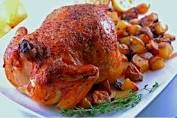
CHICKENING OUT ON THE CONSUMER


STOP PANDERING TO FARMERS

You always have to check your wallet after the feds do a deal with anyone,  but the Tory trade deal with Europe sounds like a win-win even as the usual suspects scream foul.
Actually I wish they were screaming fowl, since chickens are one of the long list of foods where Canadians pay too much because our governments care more about farmers than they do shoppers.
Of course we don't know the details yet. That's the way governments work. The devil is in the details, so we have to wait to find if we are in heaven or hell when it comes to this trade with the EU.
But let's concentrate on what we know now about removing some trade restraint on cheese and sea food. So we may get a break on some fine cheese imports, and pay more for sea food because our fishermen can now export more to Europe.
And some imports from the EU will be cheaper here, which is great if you're into perfume and fashion and sauerkraut. We're promised that it's the biggest trade deal ever, but all the delicious hints for a year that Canada may be forced to give up its protectionism of farmers to get this deal has turned sour.
And that really bothers me because it appeared there was a slim chance that one end result just might be that you and I would be able to pay a reasonable price for all the foods that the marketing boards have in their evil clutches like goliath squid from the deep.
To me that.is more important than the price for Chanel.
The galling fact for someone like me who likes milk and yogurt and loves cheese is that Ottawa has always cared more about the dairy farmer than about you and I, and not just because Quebec has more dairy farmers than almost the rest of Canada combined.
I remember the smug demand from the separatists that bugged me the most.  Quebec dairy farmers expected to keep their protected and preferred deal on their industrial milk even after separation, and couldn't understand the concept that if you leave a country you can't expect to keep all the special deals and benefits that you got from the country.
All you have to do is slip across the border and buy chicken, eggs, bread, beer, cheese, beef, pork, lamb  etc. and find that due to such red tape monstrosities as supply management and marketing boards, we pay more because you just can't keep some chickens or cows these days and expect to sell to the public like in the old days of the 100-acre mixed farm.
Oh no, we may have agribusiness today, where corporations have taken over many of the old family farms and are growing most of our food, but the agriculture lobby continues to demand that Torontonians pay more for our eggs and bags of milk and roasted chickens. Even our beer and bread because Ottawa insists that our brewers and bakers buy their ingredients through Canadian marketing boards which ensure the price is higher than our brewers and bakers would pay if they were allowed to import their raw materials. And any newcomer to the food business learns about quotas and inspections and other devices that make it costly and aggravating for the outsider.
Once I was at the annual meeting of the Royal Agricultural Winter Fair where I was a director that the fair did its best to ignore, not even telling me about meetings.  The speaker was the federal agriculture minister. I wasn't paying much attention until I noticed that if you prodded the figures in his official state-of-the-farm message, there was no gain from agriculture to the national economy after you deducted all the grants, subsidies and special programs given the agricorps and farmers. And there wasn't even a calculation for all the billions that Canadians overpay in the price of their food thanks to the red tape quota crap that protect the agri business from genuine competition.
I wrote that and expected demands for corrections, and perhaps my head, but there was silence from the farm lobby which didn't want to dwell, I guess, on the bald facts of sweetheart deals.
I would have been more impressed recently if the Ontario premier had decided also to be a food consumer  minister. But the backroom boys gave her the agriculture portfolio, which basically ignores the people who buy the produce, because if you have a lesbian from the Big Smoke of Toronto who is very much a city person, you need to make her more palatable to the rural voter.
Oh yes, the rural voter! In Canada, the rural voter has more clout than the urban voter because predominantly rural ridings have fewer voters than the big ridings of the cities. So it's just brute politics that means the farm vote is more important than the city vote.
If the Harper Tories really want to win the next election, I know a lot of people who are just like me and would like them to spend less for starters and then kick the marketing boards into the Great Lakes.
Before you dismiss all this as the rantings of a city consumer who cares little about the poor farmer, I would like to point out that I have lived on a small farm and had many farm relatives, including brothers-in-law, who defended marketing boards and think city folks are spoiled when it comes to food prices.
Hardly! We've been gouged for so long, too many of us have become accustomed to the robbery.

ALL HAIL THE MCINTOSH RED


MY THANKSGIVING GIFT

It was a gift of nature. So many petty things can go wrong at a cottage, that when something big goes right, and is a surprise to boot, it's something to cherish.
And so there I stood on Thanksgiving morning, with the last apple of the year in my hand, and thought isn't life grand. One scarlet McIntosh Red, once the most famous apple in Canada, and still one of the best, sat glowing in my hand, safe from the bloody ravens that appeared several years ago to deafen me with their raucous calls and punch the occasional hole in my Macs.
When Mary and I moved into Burnt Point 33 years ago (a significant number for anyone raised intensely in the Baptist church) the widow who was selling her favourite spot on Earth because her husband had just died, gave me a rough census of all the foliage and what lay underneath. I recorded her lecture, which didn't help much when I tried to find the septic tank. And she wasn't really much help on the trees. Still she said the old gnarled tree just outside was a dwarf Mac.
I paid attention to that, but the tree didn't pay attention to me. It never produced despite my spraying and praying. Eventually it was just a place to hang bird feeders and I didn't expect anything from it.
I knew all about McIntoshs, of course. First in school, since school in ancient times actually taught stuff like all the fascinating bits of Canadian history and what all those weeds and flowers and trees were that we passed when we walked the five miles or so to school. (Actually it was several blocks but I exaggerated to make a point to my three sons when they grumbled about how tough life was.)
The history of the Mac is always intriguing. It was as if God had picked a sapling out of the Garden of Eden and planted it on the farm of John McIntosh in 1811 in Upper Canada. No one is quite sure  where it came from, or what fruit tree could claim ancient father/mother rights. McIntosh cherished the sapling and started selling Macs in 1835. Decades later it had really spread as the most popular apple in Eastern Canada, New England and eventually some parts of Europe.
I remember the arguments of grownups down below when I roosted on the stairs after bedtime about whether the Mac was too tart and why it couldn't ripen earlier than late September. This was long before we could afford to buy apples from Africa and other exotic parts.
There are many sweeter apples but there's nothing better than a pie of Macs with a thick slice of old cheddar on the side. It would be my last meal before an execution.
I was putting a bird feeder back together in August after raccoons had pulled it apart, probably maliciously because they had emptied it.  I filled it, hung it back in the McIntosh tree, and stood back to admire.
Much to my surprise, over my head, were dozens of apples. Never had there been so many. In fact, most recent years, one or two wormy Macs would be the crop, good only for skimming across the waters of the Trent, not even enough for one chomp. I wasn't surprised at that because the tree probably is 60 years old.
For more than a month, the ravens and I have competed in hand-to-beak combat. I would pick a lovely Mac and it would turn out that the other side had been punched, bored and screwed. I would yell at the giant black bullies and throw stones and threaten to unlock the gun safe but they just circled higher and yelled curses.
I thought I had got all the apples before October arrived. I knew there were probably one or two hidden under leaves but  between the rhubarb and the Macs, I was getting tired of making sauces. I was making more than the family was eating, probably because they weren't too sure they wouldn't get poisoned if Dad was the cook. (Some days I'll leave some rhubarb leaves in, which really are poisonous.)
On the Sunday of the long weekend, I found a nice Mac on the ground and presented it with a flourish to my grandson Mikey, who regarded it dubiously, as only a 14-year-old can when presented with foreign food.  His mother didn't help when she said firmly you can't eat that. I guess they don't have  Macs in her homeland of Argentina.
Then came the last perfect apple. Just imagine! I haven't done a thing to the tree for 15 years, just cut out the occasional stub of a branch, and it rewards me with baskets of fruit.
The tradition of Thanksgiving is to give thanks for the bountiful harvest. I may be the only person that day who was giving thanks for a single apple!

Monday, September 16, 2013

SAM THE RECORD MAN'S SIGN


I HAVE A DREAM (HOME)

I have a great place for Ryerson and its president Sheldon Levy to shove Sam's sign.
No, I don't mean there, although it's tempting because the university is cheating on a deal.
Levy says he had many discussions with Sam about the sign and Sam never mentioned preserving it.
Bullroar! His family and friends know how much he loved that sign that shouted his name to Toronto like a carny in a brazen bellow.
I spoke with Sam by the hour for decades. On everything from Sunday Shopping and street people freezing in the lane behind the store to dumb aldermen who didn't know the streets.. He was proud of that sign. And Sam, a showman turned music icon, loved to flaunt the neon sizzle around his famous business that nurtured so many future stars whom he helped when they were unknown and penniless..
There is a connection between Sam Sniderman and Ryerson that is being missed. Everyone knows just how close he was to countless Ryerson students after he moved in 1961 to just a block away from St. James Square. Not only did he receive an honourary degree from Ryerson, his close friend Janet had been a dean at Ryerson.
So when they came to Canon Derwyn Shea's home on that lovely stretch above Grenadier Pond, and after he delivered a barrage of friendly insults about what I was doing wrong, the talk over dinner was full of Ryerson and the CNE.
Shea and I had been CNE presidents and Sam, who had been a member of the two boards at the Ex - the one that is the landlord and the one that runs the fair - disagreed with much of what was going on at the Ex. For starters, he thought there should be no admission and we could make our money off food and the Midway.
Sam, bless him, was never bashful about giving his opinion. "You know, Downing," he would say, "you guys just don't know how to run things." And we all would laugh,
So there is my justification for a new home for the two great LPs in 800 neon lights that spun in all their glory above the Sam names at his mecca for anyone who cared about records in the Greater Toronto Area. Mount it at the Ex. Certainly not as busy as Yonge St., the main street of T.O.,  and for that matter, the country, but when you start with the 1.4 million who attend Canada's largest fair, and add the people who go to the Winter Fair, Boat, Sportsmen's and various trade shows, you have a lot of  traffic through  Heritage Court, that huge lovely yellow room south of the Coliseum in the west end of the Direct Energy Centre.
The university bought Sam's building in 2008 after his business fell on evil times due to electronic change and the shifting pattern in stealing rather than buying music.
The idea was that the rowdy colouful sign/front would be kept and hung again on what the university built there. Ryerson says it spent $150,000 dismantling the signs but then everything fell into a limbo not lit by ideas or honouring a contract.
So I propose that the university's former chancellor, David Crombie, use all his expertise as a former mayor, lover of city history, friend of Sam's and lover of the Ex, to hammer out a deal between Ryerson and Exhibition Place where the university restores the sign and pays to have it mounted on the south wall of Heritage Court.
In fact, about a dozen years ago, we had a plan to mount there the neon sign from the Flyer, the famous demolished wooden CNE roller-coaster.. We even had a Flyer car that could have been part of the display. The letters are 84" high, 48" wide and 10" deep. So it wasn't as if it would have filled the wall, but Arlene Campbell, the official directly in charge of the Centre, didn't like the idea.
There is an interesting relationship between the two signs because Sniderman was key in saving the Flyer sign. After all, he cared deeply about Toronto's past and was willing to put his money where his mouth was, something that many, especially councillors, would never do.
If the Ex is ruled out as a home, there are plenty of empty walls at the Metro Convention Centre. I am sure the chairman of that board, Walter Oster, who displayed his love for the past in the wonderful marine items he accumulated in his waterfront seafood restaurants before it closed, would be a sympathetic audience.
Ryerson is talking about sinking plaques in the sidewalk at that corner to remember the store and the man. Levy says the Student Learning Centre being built there doesn't have a suitable facade to which the sign could be attached.. But then that's to be expected from the Ryerson of today that isn't that proud of its history back when Sam arrived  on its scene.
H.H. Kerr, the first principal (he preferred the Scottish title to president) had a dream of the Ryerson campus extending from Yonge to Jarvis. Having a building right on main streets was one of his expansion goals. Dr. Kerr would be so proud of what his baby was accomplishing in new facilities.
I remember him talking about it at length when I interviewed him by the day at his Rosedale apartment for the official history of Ryerson. The university commissioned it from me, accepted the manuscript and paid me, but then never published it because it was perceived as reminding the university community that Ryerson had started so humbly, it constantly was called just a trade school.
I am rewriting and updating the manuscript and just finished the chapter where Sam The Record Man arrived to crush the business at the A and A store just to the north that was the unofficial Ryerson book store.
Of course Sam was famous for his records even before he came to Yonge. The family had a store on a curve of College called Sniderman's Music Hall. Sixty years ago I heard about an LP from Stan Kenton and his Innovations in Modern Music and after school took a trolley coach and two streetcars from Weston to buy the record from Sam who was already ebullient in his trade.
This city is filled with people who remember their first trek to Sam with fondness, flipping through the bins of 78s and 45s and 33s where it was obvious you came for the music, not the decor.
Hanging Sam's sign at the Ex where he was such a fixture for decades would be an honourable compromise for the university. They should pay every cent for refurbishing and mounting, and while we're at it, let them pay for fixing the Flyer sign and mounting it too.
Then there actually would be heritage in Heritage Court. In honour of Sam. A solution that would be welcomed by tens of thousands.

Sunday, September 15, 2013

ENTRANCING MY BLUE HERON

after
MUSIC HAS CHARMS TO SOOTHE THE SAVAGE BREAST

I'm sure that the Great Blue Heron that stands as still as a statue when it isn't looking suspiciously up the Trent and pooping on my point is now the great great great descendant of the one that came with the cottage on Burnt Point when I bought it several decades ago.
To me it's the same bird. I greet it in the spring with quiet appreciation and then almost take it for granted. But when it lands close to me, we stare at each other and I admire it more than it admires me.
It gave me a magic moment the other day.
Years ago my son Mark went to Bay Bloor Radio (which sells wonderful but costly stuff) and bought me two outdoor speakers that look like rocks. Wonderful sound. I can really crank up the music through them if some jerk fisherman is in his ninth hour of fishing within feet of my shore.  Or when the neighbour's son brings a noisy pack to howl at the moon and play unmusical nonsense at 2 a.m.
The other day, the Toronto classical station which is relentless in promoting the Znaimer Zoomer empire, and Moses' wife, played one of the greatest songs in opera.
I stopped to listen, as I always do, because it is like the heavens opened and angels are serenading mere mortals.
Georges Bizet is scorned by some and his creation of The Pearl Singers may now be remembered mainly for  one musical soliloquy. I refer, of course, to "au fonds du temple saint" when the tenor and the baritone discover that they are in love with the same woman.
The hair stands up on my neck when Jussi Bjorling, the tenor known as the Swedish Caruso, and the great Robert Merill, sing that duet.  It almost makes the so-called "new" 96.3 FM classical station okay despite the incessant propaganda.
Then I noticed that the heron had moved from the very point, where it makes the manure spreaders known as Canada geese look constipated, to a little landing on the side that my son Brett built for his sons Matthew and Mikey for fishing,  We call it M and M Point. The heron wanted to be closer to the speakers. And there it stood listening to every gorgeous note.
It stayed for a few more pieces, listening intently but without the concentration it had given Bizet as interpreted by Bjorling and Merill. Then the mood was snapped by some Zoomer promotion and it flapped heavily away, looking like it was flying backwards, sounding like a rusty hinge.
Yet it does come back, not enough of course. My heron doesn't like the "modern" afternoon drive show music on CBC FM that much but the classics it loves, But then the world has paused for that particular duet every time it's played.
As I've written, I keep a radio playing in the boat house in a vain attempt to stop beavers from turning it into their lodge. Doesn't work. Even rap fails, and that can kill cockroaches. It was four centuries ago that the phrase was coined that "music has charms to soothe the savage breast." It certainly works for me, and the heron, but not, damn it, for beaver.
It is one of my joys of nature that herons and loons in my stretch of the Trent have now been free for generations of idiots who would chase them in their boats. You certainly seem to be able to get closer. I have been swimming around the point and been ignored by a pair of loons who are so busy diving and munching that they don't bother to keep their distance.
I was golfing with my Plewes cousins recently at Pinestone Resort near Haliburton when a very large heron stood near a creek where of course I had driven my ball, It reluctantly moved, even though there were men around swinging shiny clubs. Maybe it figured out we didn't know how to use them.
At St. Pete's Beach in Florida, some cold days there can be more herons near the pool than Snow Birds.
My oldest son John Henry and I went to the Galapagos Islands a decades or so ago at great cost and difficulty. Of course we were entranced by the Boobys (those are sea birds, not blondes) and the giant tortoises. After all, there still may be a tortoise around that Charles Darwin rode because no one knows how long they live.
I returned filled with stories and loaded with film, the digital snapshots not yet having been invented to ruin real photography. It was a busy Friday at the Sun so I didn't notice just how Associate Editor Glen Woodcock was displaying my column and pictures.
So I opened my Sunday Sun at breakfast with the same anticipation as our readers and discovered that  one of the main pictures in my spread was of a Great Blue Heron standing on a point being hammered by Pacific waves.
I phoned Woodcock to grumble mildly that I had flown out to the middle of a giant ocean to visit a famous nature sanctuary and he used a shot of a bird that I could have photographed at my cottage.
It was a great picture, Glen said. And it was. But then it's hard to take a bad one of a heron, the largest of the wading birds of North America, which is now more common than when I was a boy a century or two ago.
                                                          ................
I was telling my musical heron story to one of the best dermatologists around, Dr. Franklynne Vincent, after she told me about her birding visit to South America, including, of course, Machu Pichu.
(Vincent rescued me from the deep bedsores given me by the evil care at St. Joseph's in Toronto, which never even bothered to reply when I told hundreds of thousands readers in the Toronto Sun that it was arguably among the worst hospital in Canada.)
Then Vicent one-upped me, which would please my friends who listen to my anecdotes. She and her  husband, the avid birder,  have had a macaw for 10 years which rides around on Vincent's shouder. In the morning before she starts her hectic day, the macaw gets vocally agitated if she doesn't turn on that classical station and let it listen, to the music that is, not the endless Zoomer plugs.
Doubt if I can get the heron to do that.