Wednesday, March 16, 2011

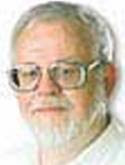
LARRY ZOLF: A GIFTED OBSERVER OF CANADA

HE HAD A NOSE FOR GOSSIP

As Larry Zolf never forgot, I was the first to write about him. And he loved it. He hungered for publicity because he was never happier than when he was telling you, or anyone, even the waiter, what he thought about just about any topic.
And now his voice and his intellect have been stilled. But not the memories.
He and some college chums had dreamed up some wacky political skit which was being performed somewhere so they phoned the old Toronto Telegram looking for publicity. It was early on a pleasant evening and nothing was going on so the night editor, Doug Stuebing, sent me off to U of T in case the students had some good lines.
They did. Wonderful biting political commentary, the kind that tumbled out of Zolf if the CBC or some editor didn't panic and resort to the libel lawyer. So a small story appeared, and Zolf was grateful. He ignored that the Tely was CONSERVATIVE and I was a conservative and he was a labour-loving refugee from the Jewish-Polish community of Winnipeg.
For  decades, Zolf called me regularly to find out what was going on. And I returned the favour. Often he was feeling lonely and just wanted to talk. In a hurry, on deadline, we would use each other as a resource on what had happened in Toronto politics decades before. I could Google Zolf's memory. He worked at it, talking, gossiping, drinking, reading, pontificating electronically, skewering, writing books and columns and an early blog, often driving those close to him to frustration because he was untidy about everything even to his  clothes.
Before an election, Zolf would call columnists like me and political insiders like Senator David Smith and get seat projections. It was a useful call for me and for him because you traded what you really knew for ridings where you had no idea.
When I was Editor of the Toronto Sun, in the days when the suits didn't insist who the columnists were, I had Zolf write some columns. He wasn't popular with our right-wing readers, even though he would slash away at all parties and philosophies. Doug Creighton, the ultimate reader of Sun columns, recognized Zolf's wit but not necessarily his wisdom.
 Creighton regularly urged me to fire Walter Stewart, whose parents had been CCF/NDP leaders, but understood when I didn't on the grounds that any real newspaper needs a range of views.  So I knew that adding Zolf weekly to the editorial mix was really tilting at the windmills, since Zolf was occasionally like Stewart on speed.
Zolf was used as a resource by his main employer, the CBC, because he had a wealth of home phone numbers. He also was a trusted insider for the anchors. The secret for all this was that Zolf never tried to get major politicians to speak only to him, to lock up his sources. And he talked to everyone, even if he would hoot incredulously - you could recognize his laugh even in the turmoil of Question Period - if the ideas got really strained.
He was a guru in his beloved Beaches.  Tom Jakobek when he was just a trustee trying to step up appealed to me to help end the rumour he was a Scientologist. Zolf was spreading it, he said. So I told him to have the family church minister be photographed with him for campaign literature and to phone Zolf and tell him that I said to knock it off. He descended on Zolf's house and delivered the message at the door. Zolf phoned me and said he almost had a heart attack when this tall "spooky" guy loomed over him at the door. But Zolf stopped the assault and Jakobek won. (I can just hear Larry saying that the line really should be that the city lost. )
I've seen PMs, premiers and ministers spar with Zolf, some times with exasperation tinged with affection. Yet what the politicians and his colleagues all recognized is that Zolf liked nothing better than yarning about what was making politics tick in Canada, and that he really cared.
He was, he said, the ugliest Jew around. Ah yes, that was a nose that even Cyrano would have envied. But what a passion for politics.

Monday, March 7, 2011

MEMORIES OF SAUL ALINSKY AND SIT-INS

THE SMOKE FROM ANCIENT BATTLES

Was it really forty years ago when campus guerillas like Mark Bonokoski fed the student unrest of the budding university of Ryerson, and the giant of community organizings, Saul Alinsky, could see as his  life ended that the sit-in technique that had blossomed under his inspired leadership was already dated as a weapon.
My musings are prompted by a question from John Cosway, the diligent steward of the Toronto Sun family blog. He was quoting from an Internet item about Bono, the veteran Sun columnist, who when he was a student at Ryerson and helped run a renegade student newspaper, was involved in sit-in confrontations with the university president.
Cosway wondered when was the last good Toronto student sit-in. I bet there are aged radicals who have their favourite but they all started to blur together for me. We had the angry brawling between supposed students and rough Toronto cops at the U of T education experiment known as Rochdale. Not a sit-in but more a drug party during a raid. The cops went too far but it could be said that the whole situation baffled them.
 Hardly the often brutal stuff of the anti-war protests on American campuses. The famous sit-in at the Columbia president's office, the senseless deaths at Kent State, the awful Chicago cop assaults on convention demonstrators, the nation-wide bonfires of flower power, draft cards and flags, it seemed every day brought another campus confrontation that filled jails. Sit-ins were everywhere.
Bono and the grouchy protesters at Ryerson mirrored what was happening on the streets just outside.  The community organizing that had become a major political force in the U.S. under Alinsky had a Toronto version with John Sewell and Karl Jaffary, both lawyers who had had all the advantages, fighting developers with sit-ins in condemned houses or in front of the bulldozers. Both became aldermen and could fight evil from inside the system, and Sewell even became a dismal one-term mayor and then a voice calling endlessly from the wilderness.
Alinsky was the most famous community organizer in the modern world as he tackled every ghetto. (Some argue that Jesus was really the first.)  Typically, Hilary Clinton quoted him in her university thesis. William F. Buckley Jr., the articulate conservative, praised him. There were Toronto councillors like Gordon Cressy who could quote from Alinsky's manual for fighting the system.
But now we have a community organizer from Chicago who turned his back on an impeccable legal background and became president of the United States. I'm sure that Barack Obama also quotes from Alinsky even though he died in 1972, just as Bono graduated and Ryerson settled down.
There are many who want to pin everything bad about Alinsky on Obama, but they can't ignore that Alinsky called himself a non-socialist left winger.
It was Alinsky, quoted in a Playboy interview (I did read it for the articles,) who warned activists that sit-ins would no longer work because North America had adjusted. Alinsky was being shown the executive suite of a new corporate headquarters. There were two lobbies for the CEO's office, and it was explained to him that the one for the sit-ins came complete with a washroom and change tables in case any of the demonstrators brought along babies.
It was Alinsky who devised the technique (publicized by Toronto's own Arthur Hailey in the bestseller Wheels) that forced a Detroit bank to stop discriminating against black customers. Blacks lined up at every window and started a new account with a small sum. Then they went to the back of the line and withdrew the money.  Again and again. This went on until bank officials begged for mercy.
Alinsky also forced one of the world's largest airports, O'Hare, to end its discrimination against blacks by working out a scheme to place a black bum on every public toilet in every terminal. For the entire day. A black standing in front of every urinal. He was working out the logistics such as how many buses and how many volunteers were needed for what really was to be a shit-in when he had a brilliant idea. He told the airport managers what he was planning to do and they caved. He got everything he wanted without having to block one of the thousands of conveniences.
Occasionally today, you have a handful of protesters occupying some politician's office for  hours, hoping for  publicity. There is no bonanza for them because the politician stays away, and the protesters are what the media call the "usual suspects." (The term comes from the movie Casablanca.) There is also the reality that's it all rather silly. After all, the typical leader, whether of politics or industry, moves around with a cell phone and often a laptop. In the age of texting, occupying an office is just a waste of time.
Today's campus radicals are given seats on the university boards and can tell the president across the big polished table what they think about any subject under the sun. And they do. And do. I suspect that some days the president thinks the sit-in was easier.

Wednesday, March 2, 2011

CANADA'S NNAs ARE GOLDEN OSCARS

BOB REGULY'S AWFUL END TO GREAT CAREER

If I were to tell you that there was an actor who just died who won three Oscars, you would and should be mightily impressed.
In the tough world of Canadian journalism, the National Newspaper Awards for more than half a century have been our cherished Oscars. And since Canadian newspapers are among the best in the world, and Canadian journalists, like our comics, routinely star on the world stage, to win more than one NNA is an honourable accomplishment.
  Well, Bob Reguly, who just died at 80, won three NNAs in four years for himself and the Toronto Star. Stunning!  Now the great columnist Peter Worthington and the superb photographer Boris Spremo have doubled that accomplishment, but then they are from another planet where they work 30 hours a day.
The farewells, which tragically have to mention Reguly's terrible exit from his illustrious career, all concentrate on his finding of the tart Gerda Munsinger in Europe and her revelations about her scandalous romp through the federal Tories which match any seamy stories of the round-robin sex of England.
It really was a tale from between stained sheets that made us all feel like we needed a shower.
But I remember his NNA for the finding of the unionist/thug Hal Banks on a ship in the Brooklyn harbour when Canadian authorities were mystified as to his location. They  hadn't looked hard, which was the point of Reguly's scoop.
Reguly told me a twist to the story that is not well-known. Itt shows the cheap accountants of the Star to be as miserable about expense accounts as the Devil counting heads in Hades.
Reguly saw Banks on the deck and told the cabbie to take him to the nearest drugstore where he bought a Kodak disposeable camera for around $55 to prove to the world, and the Star, that he had found Banks.
He returned and was spotted when he was snapping away at Banks with the cheap camera. Banks' bodyguards chased him. The taxi was cornered but Reguly persuaded the cabbie to drive through the thugs and risk a dangerous collision..
They got away. Reguly was grateful and didn't have much money for a huge tip. So he emptied the camera and gave it to the cabbie in thanks. The accountants wouldn't reimburse Reguly for the camera's purchase because he couldn't produce the camera.
That's not the end to the picture tale. The Telegram, locked for years in bitter competition with the Star, was rocked by the Reguly scoop. I was ordered to dispatch to New York a reporter/photographer who had just returned to the Tely from his native Australia.
Peter Geddes phoned to say he had spotted Banks on the deck and got one good shot with his long lense before the thugs started chasing him. He wirephotoed the picture while I alerted my bosses that at least we had a picture. A darkroom technician emerged in the  middle of the night staring dubiously at the result. I phoned Geddes and demanded to know why Banks was slightly out of focus when some chap in a suit was sharp. He replied that he didn't know what Banks looked like - having been in Australia when this scandal blew up - and had photographed the best dressed guy on the deck. I said Banks was in the background, in a sports shirt.
So the technician, Wasyl Kowalishen, worked diligently with an enlarger in the darkroom, spotting and dodging and using all the tricks that you could do with black-and-white pictures in the darkroom, before the days of digital and photo shop. And the result on Page One the next day won Geddes an NNA. Not quite as worthwhile as Reguly's, to put it mildly.
I remember Geddes for another reason. He was very talented but the strain led to his drinking and that ruined his family life. So he left the business.
I talked to him once more. We learned that Pierre Trudeau had taken Margaret skiing on their honeymoon at Whistler. The Tely figured that it could scoop the world, or at least the Star and Globe, by having a picture in the next edition. This was far more difficult then than it would be now because it  would mean getting a photographer to the slope, taking the picture, processing the picture and then finding a wirephoto machine to send it across Canada. All in a few hours!
A rewriteman yelled at me that he was talking to the guy running the ski lift at the bottom and he thought it was Peter Geddes. Our Peter Geddes! So I got on the phone and didn't get the warm reception that you would expect when I helped him win a major award. I told him to get the picture and we would pay handsomely. Peter said he didn't own a camera. I told him to do the Reguly thing, to go buy a Kodak disposeable. He refused, saying he never intended to touch a camera again. And that was that. He hung up on me, and possibly another NNA.
Reguly had a devil-may-care attitude to reporting. It's no surprise to find he parachuted for bucks at the start. He was a reporter, not a columnist, and distrusted politicians almost as much as he did editors.  He started dropping in to see Worthington at the Sun and when Peter was busy playing editor, he would tell me all the dirt he had collected or suspected about major politicians. They were marvelous tales.
One main target for him was John Munro, a federal politician of many jobs in cabinet, and many more suspicions. Munro sweated routinely, which made him look guilty even if he was talking to a kindergarten class. And he got involved in strange business, like the day he emerged with a shiner and said he had fallen in the tub. It was widely believed his wife hit him during a quarrel. (She was a remarkable woman who started as a Stelco secretary and ended with a doctorate and a provincial cabinet post.)
So Worthington got Reguly hired at the Sun and he was teamed with a young reporter who had the goods on Munro, or so he told Reguly and the Sun. I knew a little of the story, which was tame compared to other stuff that Reguly had told me. I won't go into details because this story was horrendously wrong, created by the reporter, Don Ramsay, because of ambition, chemicals and stupidity.
The Sun settled an embarrassing libel suit (even though newspapers generally win) because Lorrie Goldstein, now the Sun associate editor, and John Paton, a major star today in American and Canadian publishing, couldn't find support for the story.
Reguly left, bitter. He used to complain to young journalists that he had been betrayed by the Sun and it showed that newspapers wouldn't support investigative journalists. A journalism tragedy where I felt he had betrayed instead the Sun and his craft. We ran into each other long ago in Cottage Country where he was still saying he had been the victim and cursing every boss at the Sun.
I preferred to remember him as the reporter who with great gusto dominated Canadian journalism from 1964 to 1968 and then like a meteorite crashed into the Sun.

Saturday, February 26, 2011

FLORIDA WEATHER REDEEMS ITSELF

LET IT SNOW, RAIN, AND  HAIL IN CANADA BECAUSE I DON'T GIVE A DAMN

The weather in Florida was so bad last year that the pool heating at the condo we were renting collapsed with exhaustion.
We exchanged horror stories about cold weather with our friends, and they were in Florida.  Some vowed they would never return. And they didn't. I hope the weather now is good in Mexico too.
I am ecstatic to report that the 2011 February in Florida has been the best in years. It helped that not only was the new heating equipment for our condo pool working well, even on a few crappy days the pool was 86 F.
 When a pool is that warm, I can handle even a cold front from Canada. I remember as a kid editor working in the Yukon when we went to hot springs outside Whitehorse. The air was freezing. Your hair froze between strokes in the pool. It was a grand experience, made grander perhaps by the over-proof rum.
The contingent of Canadians at our condo flop around in the sun like beached dolphins. And then we all phone home to taunt relatives and friends with the temperatures here.
Unfortunately, there is a new curse to blight our day and to be the new big topic of conversation, the price of gasoline. Usually the conversation around the pool peters out after questions about where you're from and how long it took you to drive down, and what was your route. The location of the best happy hour and early bird special is still topic number one, and will be even if gasoline goes as high as the scare predictions.
All I want to know is why my oil stocks aren't going up at the same rate.
We spent some time anticipating the shuttle launch, and then on the scheduled day, Mary and I and our friends the Garricks made sure we were peering into the eastern sky at precisely the right time hoping to catch a glimpse of the tower of flame even across the peninsula.
 No luck. Guess that is pay back for the time when I saw the shuttle launch without the slightest planning on March 22, 2009.
Thanks to my son Mark, I have paid far more attention in recent years to the shuttle than I expected. I wrote about all his trouble to see one launch on Feb. 7, 2010 in a blog "Chasing the Shuttle".
Then we went in January to the Kennedy Space Centre along with many other Canadians. It was much more interesting than I remembered, and I wrote about it on Feb. 4 in a blog titled SIDE TRIPS FOR SNOW BIRDS.
I wonder if it's just Mark's influence on me but I sense more interest, and a growing nostalgia, in the space program as it winds down. The TV anchors talked wisfully about how it was all going to end. They were as sad as if they were reporting on the cancellation of their favourite hair product.
Everyone seems to be paying more attention. The launches are not just humdrum routine but are back as major events, complete to count-downs.
I'm sure that NASA is feeding this gleefully. And the White House will be paying close attention. Heaven knows that the world needs more good news, even if it costs billions, just as Canadians fleeing from winter need it to be sunny and clear and warm with all the cold fronts staying north of the Great Lakes.

Wednesday, February 9, 2011

WONDERFUL VISITS TO EGYPTIAN PRISON

THE MIRACLE WAS THAT  MUBARAK SURVIVED TO 2011

My first visit to Egypt wasn't the smartest thing I've ever done.  I showed up with my wife several  months after Anwar Sadat had been assassinated and there were soldiers with machine guns in sandbag bunkers on most corners.
Mary and I had a wonderful time despite my dumb timing. But we were fools in a time capsule where  any turn in the road might reveal a challenging cop or a statute carved an eternity ago.
I returned to 1982 North American civilization filled with dire predictions that the wonders of the Egyptian past may have survived centuries but they may well be ruined in the next one. And it also seemed obvious that the brutal dictatorship of Hosni Mubarak wouldn't last either.
A second visit five years ago showed that the Egyptians were taking better care of their archaeological  treasures than they were three decades ago, and even though his overthrow was inevitable, Mubarak still ruled with an iron fist and very cheap bread. In fact, the media sifted the warning signs and concluded he was secure.      
 My naive first visit was prompted by a wonderful whim of the Toronto Sun's founding publisher, Doug Creighton, who believed in working hard but newspapers were also supposed to be fun and life often looked better through the bottom of a martini glass.
 When news was slow and the city's mood was down, Creighton believed that the Sun should be entertaining as well as informative. I remember him during a depressed time sending Allan Fotheringham  to sample the best hotels in the world. The Sun staff hated Foth's assignment hut the readers loved to hear about the Lord Nelson Hotel in Cape Town where they ironed your newspaper before a  lovely  breakfast.
 Creighton said things were slow around Ontario politics so I should pick several world cities and go see how they were run. And take Mary, he added. So off I went to Rome and Jerusalem. Then I added Cairo since life seemed to be quiet there.
Rome's mayoral office was hospitable and Teddy Kolleck, the legendary mayor of Jersulem, folded Mary and me into a week-long seminar for a committee of world leaders and eminent professors on how he was running the cradle of religions. It was Kolleck's clever manoeuvre against the move at the UN to make Jerusalem an international city not ruled by the Israelis.
We flew directly from Tel Aviv to Cairo on a bootleg flight that didn't exist officially. The plane had no markings, the barf bags were from EgyptAir, and the flight crew were ex American fighter pilots working for El Al.  They flew the battered anonymous jet as if we were in the Six Day war.
Just getting downtown to the Nile Hilton was an adventure since the cab companies and limousine operators were having their own war. I didn't ask to see Sadat's assassination site but we were taken there anyway, and then we were abandoned on a railway crossing in the middle of nowhere because I don't think the driver liked me.
The idea that some Canadian columnist wanted to visit Cairo's administrative headquarters was so farfetched, to the Egyptian bureaucrats that is, that I never did get a reply.
So Mary and I wandered around, wading through the begging kids, ignoring the exorbitant tip demands for any service, getting mixed reactions at all the military checkpoints. At one mosque, they almost hugged us, saying we were the only visitors they had had for a week and what could the soldiers show us.
The fabulous collection of treasures in the  Egyptian Museum were dusty and painters were not even using drop clothes to protect splatters raining down on King Tut's wonders. No one seemed to care.
On my last visit, the improvement in basic housework in the museum was astounding.
The museum, as the world now knows from all the coverage of the uprising, is on Tahrir Square. We spent a lot of time there because it was just outside the back door of the Hilton and it is a crossroads for the city. That is where I went to find the illegal money dealers who gave you deals on Egyptian pounds that were 50% better than in the Hilton lobby. (Nervous transactions because the dealers feared the secret police. And the buyer had to be careful that no phoney notes were shoved into the middle of the wad.)
So why am I detailing a visit 30 years ago? Because in the early months of the new leader, Mubarak, there was no sign, no illusion, no hint, that there was any freedom of any kind for any Egyptian. And no one said it was about to change. Any person holding a sign demanding just one taste of democracy would not have lasted in Tahrir Square. Even though it has been a traditional centre for careful protests, its second name of Liberation Square was cruel irony...until now.
 By noon, the diesel fumes in the square would give you a headache if you didn't retreat from the sun to air conditioning and the excellent Stella beer.  I'm sure for many Egyptians, fear also made that air heavy.
There was no suggestion then that Tahrir Square would really be known more as Liberation Square, not with the suffocating security that blanketed it because of surrounding government offices.
There was one overwhelming fact that any tourist should have noticed on my last visit. When tourists moved between the wonders of the ages like Luxor or the Valley of the Kings, the buses moved in convoy as if it was a military operation in enemy territory. No bus driver or tour company rebelled. If your bus was headed to the Red Sea, it waited at the side of the road in the dusty heat until the main convoy arrived and then you all headed through the hot desert past the watch towers of  soldiers. Safety in numbers, or so the tour companies and dictator hoped.
Any healthy government doesn't live in daily fear of terrorism in every part of the country. And Mubarak's did for its entire life. Surely a government is rotten to its core when it rules by brutal cops and a military that lines the major roads and insists that tourists be protected in ways that are unique in the world.
About 12% of Egyptians are involved in the tourist business. Tourist dollars are essential to the country's economy.  It's not just Egyptians who have died in Liberation Square. Nine German tourists were blown up just outside the museum in 1995. In 1997, more than fifty tourists and Egyptians were killed at the Valley of the Queens.  There was a major bombing at a Red Sea resort where Mary and I had wondered at the tropical fish just months before.
All you had to do was skim the Internet and the deadly deeds of extremists, and the government's warnings about terrorism were mentioned often in items about Egypt. For example, take the overnight train from Cairo to Luxor but it would be better if you didn't get off at certain stations.
The wonder isn't that Mubarek was toppled from his throne made from the skulls of murdered dissidents in 18 days, but that it didn't happen sooner.

Friday, February 4, 2011

SIDE TRIPS FOR SNOWBIRDS FROM I-75

TORONTO TO OAK RIDGE TO ATLANTA TO KENNEDY SPACE CENTRE TO TAMPA WHILE HAVING LOTS OF SCIENTIFIC FUN

Once upon a time, when holidays were too brief and taking the kids on any trip was playing Russian roulette with your credit cards, I perfected the Downing rush to somewhere.
We loaded the car with snacks and good pop and threatened to behead any son who asked whether we were there yet. It worked fine, and readers of the Tely, Sun and the Ontario Motor League magazine seemed to appreciate my tales from the road.
Just before the sons flew the nest, we specialized in Toronto to the south of Florida in 27 non-stop hours. Even though we had four drivers, dad always drives the most, I find, and I used to sink into the sea with a Bacardi and coke in hand, semi-comatose, on Saturday afternoon after fleeing Toronto in the wee hours of Friday morning.
Old habits die hard, and Mary and I have continued the dash to Florida, after increasing it to a civilized two days. My son, Mark, who lives in China, has rejoined the expedition for the last two years. And last year he grumbled that it would be nice to actually see something as we roared south.
So this year I played hooky from the normal schedule. And it took us four days and 300 km. more. Say about $600 extra for museums, motels and meals. But the three Downing musketeers had a good time. (Or so they say. Wait, however, until they're mad at me.)
Mark has a science and chemical engineering degree from U of T, plus a MBA that he finished on an exchange with a Hong Kong university. He was fascinated with the birth place of THE bomb, much of which happened at Oak Ridge in Tennessee. Not that far off the main street for Canadians fleeing to Florida, I-75. Pleasant drive in, and then the museum called the American Museum of Science and Technology. Admission for adults is $5, $4 for seniors. And we had a good visit.
There was one wing jammed with information on the Oak Ridge community and  the staggering numbers of people who worked on the atom bomb. I had no idea that something like 80,000 people were there for a few years, or that the project "borrowed" $100 million worth of silver in the work developing the bomb.
As someone who reads widely and was also in the RCAF a decade later -  not all old military equipment looks that strange to me - I was surprised pleasantly to find much of the material to be new and  interesting. Fascinating stuff on the instant houses and instant transit system that were created in weeks. Don't remember anything about this in my urban geography classes.
Much of the displays in the museum resemble what you find in the better science centres of the world (for example the Ontario Science Museum in Toronto) but the displays related to the Manhattan Project  just brim with information. As Mark quipped in a twitter, the information is so dense, "there is a critical mass of ideas."
So yes, to answer the eternal question from parents hurtling south with kids bouncing off the roofs, it is an interesting detour.
Mary then announced that she had always wanted to see the aquarium in Atlants. I have always gone around Atlanta rather than through it since we were almost mugged on a hot summer night by a street full of angry blacks (but that's another story.)
So we went around and around downtown,  past the CNN headquarters and Coca Cola museum, and then Mark using his I-phone found us Martin Luther King's church. We finally ended up at a Holiday Inn that didn't cost a fortune
We were at the Georgia Aquarium before it opened. It is debt free, it claims, and no wonder. Seniors pay $21.95 each and adults $25.95. I have been to aquariums all over the world and love them, but I have never paid that much. But it says it is the largest squarium in the world and its huge main tank is a wonder to behold. It is packed with such spectacles as three of the world's largest fish, the whale shark, cruising comfortably while a giant manta ray practises languid somersaults over and over.
The fish shimmer and dance in puffs of colour. All the exhibits are first class, the staff great, and the crowds  tolerable. (I would hate to be there during a school break.) For the first time in decades, I thought I might recommend that driving through Atlanta, which many do instead of taking the bypass, is worth considering.
Since Mark in 2010 made two trips across Florida to watch a night launch of the shuttle around 4.15 a.m. on Super Bowl weekend,  it  seemed that not going to the Kennedy Space Centre was rather dumb. After all, we hadn't been there for a couple of decades. (I wrote a blog about Mark's nocturnal adventure, Chasing The Shuttle, on Feb. 7, 2010. On March 22, 2009, I wrote about how most of us now view the shuttle in a blog titled A Shuttle Of Past Glories.)
As the space centre continually reminds visitors, it receives no taxes to support it. Obviously it couldn't exist without all the exhibit and material provided by NASA, and the centre and the active launch pads on the Cape have a symbiotic relationship that is more important to the space centre, I suspect, than it is to NASA.
So there is a hefty admission charge, a basic $39.11 for seniors and $43.46 for adults. Is it worth it? I thought it was. But I really think readers should consider those costs, when one of the big arguments in government today is making programs and projects, whether in culture or education, pay for themselves.
So the aquarium and the space centre don't get government money and as a result, the three Downings had to pay $200 to get in. Do I really have to say that such admission charges mean that there are families who just can't afford it, no matter how wonderful the displays are.
And they were. The garden of rockets at the centre. Walking underneath the gigantic tube of Apollo 18. A wonderful IMAX film about the glorious colours of space revealed by the Hubble telescope after it was fitted with two new lenses in a space walk that we viewed in vivid 3-D technology.
I have not given you a shopping list of what to see in the Georgia Aquarium and the Kennedy Space Centre because you can Google them and see everything they have to offer. i thought every single display was done superbly, from the humble one off to one side in a giant hangar where you could touch a rock from the moon to trying to find the leafy seahorses hiding in the kelp.
However, if I had left Ontario a few days later when the predictions were that most of North America was about to be buried under avalanches of snow at any minute, I might have been inclined to roar right through to where you could swim in the pools, not skate on them.
Thank heavens we caught a break. And thanks to my wife and son, it was a pleasant interlude!

Sunday, January 23, 2011

OPERA IN THE BRAZILIAN JUNGLE

(BLOG 4) NOT A PHANTOM BUT A SPECTACLE

It may not be as famous as La Scala but the Amazon Theatre, a beautiful opera house in the middle of nowhere, is celebrated in movies, books and magazines.
I remember visiting the Canadian ambassador to Central America  45 years ago and in the middle of a rant about how Canadians paid too little attention to Central and South America, he looked across the square in San Jose, Costa Rica,  at the old opera house and started telling me what a little jewel it was and how it was well worth a visit.
He gave me a curious look when I said I had been hearing about the opera house most of my life and it would be a delight to visit. You have it confused with the famous one in remote Brazil, he said, and so I did.
It all came back to me with a rush when I flew into Manaus where the mighty Amazon captures its tributary of the Rio Negro. Others in the fishin gparty started talking about the opera house they visited a year before.
And so I found myself at the legendary opera house left behind by fabulously rich rubber barons more than a century ago. If they had to live in the jungle, they thought, they would import the wonders of Europe to make it more palatable.
It really is the stuff of dreams. Like stepping into a shiny page of the National Geographic or watching a documentary or movie that features this grand product of the Belle Epoque era when the finest craftsmen in Europe sent their best work and the choicest materials on river boats far up the Amazon River.
Roof tiles from Alsace. Carrarra marble from Italy. The finest woods. Great glass chandeliers. Years of construction and delays before it opened in 1896 after a noted Italian painter turned the ceilings and walls into heavenly scenes.
It took me back to when I was a kid working in the town library and I discovered a thrilling travel writer called Richard Halliburton. He had been born in 1900 and disappeared on a junk sailing out of Hong Kong in 1939. He roamed a confused and depressed world between the great wars and produced books like The Royal Road to Romance where he wrote with  wonderful enthusiasm about all the famous wonders of nature and all the grand old buildings of the world.
He would have got eventually to Manaus if he had lived because the idea of  a grand theatre in the jungle was exactly the kind of adventurous construction that turned him on.
My love of travel, which endures despite the security hassles and the crowds of tourists that seem to flood any street I'm exploring, comes directly from the enchantment of reading about travel with Halliburton and the other travel bards. They are the poor man's explorers. Now we read when decades ago the more adventurous among us would have joined that expedition to darkest Africa to find King Solomon's Mines or other lost worlds.
The Amazon Theatre fell on hard times after the rest of the world found they could get by with alternatives to Brazilian rubber and for 90 years no opera singers emoted on its stage. Now there is an  opera festival every April and tour guides boast that famous musicians have graced the orchestra pit.
I was impressed by the gigantic angel that loomed out the second floor and wondered how long it had been there. Not long at all! It had been put up just for Christmas, and the Brazilians don't rush to take down their Christmas trees and other decorations which routinely seem to be among the largest in the world.
The opera house is by far the most famous attraction in Northern Brazil. The other appears to be the big fish market just up from a tangle of fishing boats filled with a glistening harvest from the great watery heart of the nation. Here we wander through ripe smells while the opera house smelled of the ages.
Sort of a Beauty and the Beast kind of day.