Friday, February 22, 2013

WHEN DREAMS TURN ANXIOUS


MEMORIES CAN HAUNT DREAMS

As a kid, I loved comics but now I only skim them. They really don't seem to be the funnies any more, but they do come in colour.
I know nothing about a strip called Rhymes With Orange but the other day, one panel showing a couple reading in bed made me grin. The husband asks the wife why her diploma is on her nightstand. She replies: ''Reassurance after another 'I've missed my exam' dream."
I don't dream that much, and can't remember enough of the nice dreams to write them down afterwards. But I sure remember the regular dreams verging on nightmares in my 20s when I dreamed I had flunked getting out of high school.
Younger readers may not understand how traumatic the province-wide exams were at the end of Grade 13. Now that they have shrunk high school, and mark inflation has infected even universities, graduation no longer appears quite as difficult as when every Grade 13 student in Ontario wrote the same exams and you needed nine passes to get into university.
The exams were marked at a central location by a clutch of experienced teachers wanting the extra money, and the only thing your own teacher could do for you is to send in a nice reserve mark in case there was some problem with your exam or you were on the knife's edge of failure.
For a decade or so after the "departmentals, " I would dream sweatily of them and failure and broken pens etc.. Then I would wake and remind myself that I actually had a university diploma and degree and my sweet-and-sour high school teachers hadn't ruined my life.
I was sort of proud of graduating second in my class at Ryerson until I ran into my philosophy prof who said he had never read a worse exam paper and had passed me simply to avoid a future ordeal. I argued weakly that the exam dealt with two of the seven texts and I had only read the other five. So I wrote everything I know that was philosophical and survived.
Ironically, then several decades passed and my occasional dreams were sweet and occasionally sexy. Then I retired with the daily ordeal of creating 6,000 columns and 3,000 editorials behind me.  Now I dream regularly of deadlines and not a thing to write. It used to be that the typewriter would jam and the paper would tear under all the erasures. Then I graduated to computers and if my computer didn't eat the editorial, the system did just before it crashed. Or the computer kept crashing. 
You get used to grinding it out in the newspaper business. Not much time to polish an adjective or ditch an adverb. And the workload keeps expanding unless you yell a lot. There's always some special section or anniversary issue and some colleague asks plaintively if you mind dashing off a few paras The bizarre thing about these new dreams is that the real pressure never bothered me much. When I was the rewrite chief, I knew that the Page 1 headline story I was cobbling together had to be finished in the next minute, and 90 minutes later it would be out there for street sales, and any mistakes I made in grammar or fact in what has been called the first rough draft of history could not be erased until the next edition.
You got used to it. If you didn't, you drank a lot or went into public relations. I find it perplexing that I now seem to find it more difficult in my dreams than in reality when I couldn't figure out the final paragraphs and some editor was bellowing he had to get the paper off the floor and where was the blankety blank Downing column for Page 4.  (Except he didn't say blankety blank.)
At least now I get to wake up, which some days is better than a good dream.

Monday, February 18, 2013

MAYOR RIGHT, M.O.H WRONG

Sun
AREN'T THERE ENOUGH PROBLEMS IN HEALTH

Mayor Rob Ford shouldn't have apologized to Toronto's Medical Office of Health after criticizing him for meddling in issues that have nothing to do with his department.
And the city integrity commissioner should be fired for not understanding that we want rigorous public debate on issues and not namby-pamby Mickey Mouse discussions.
Commissioner Janet Leiper says that when Ford called MOH David McKeown's salary an embarrassment after the mayor got mad at the doctor for approving a $60,000 study that called for, wait for it, lower speed limits on Toronto roads, he had demeaned McKeown's reputation and should be reprimanded.
There is no need to waste money on a study that shows fewer deaths and injuries if speed was slower on our roads because, obviously, we would eliminate all death and injury if we dropped the speed limit to zero. Of course accidents increase when speed does. This is not rocket science, and it certainly isn't a public health issue.
The mayor on his radio show said that he would look into McKeown's salary and "try to straighten things out." He called the report "nonsense."
I didn't realize that our urban health system and hospitals were in such fine shape in T. O.  that the MOH could go off freelancing. What about hospital wait times? What about the fact that the city hands out diet advice that doesn't work because it's wrong. Aren't those issues closer to why we have MOHs in the first place?
I sentence Leiper to watch the wonderful award-winning movie Lincoln for a taste of what is really language that demeans opponents. I sentence Leiper to read any Hansard records of what the greats say when they criticized each other and public officials. I think there is any need for an integrity commissioner in the first place and it is up to council, not paid officials, to monitor its members.
Toronto has had some classic battles between politicians and department heads. Allan Lamport was TTC chairman at war with his own top officials. George Bell, the legendary parks commissioner, had savage arguments in committee with aldermen. The TTC and the parks department were the better for these no-holds-barred debates. But this integrity commissioner wouldn't agree because feelings were bruised when politicians told civil servants to smarten up on the delivery of services.
Once  upon a time, Toronto newspapers always made sure they had a reporter at the city board of health meetings, no matter how strapped they were for staff that day, because of the strange discussions when members wandered off health issues led by the MOH as a failed shepherd. I do recall some interesting stories, like the time the health board said it wasn't really appropriate for funeral workers to collect dead infants from hospitals and transport them back to the funeral home on the TTC in a bag. The Tely ran that one on page one after several editors called me to make sure this wasn't an April Fool's stunt.
What everyone in Toronto knows except for one minor busybody official knows is that a main reason Ford won election in the first place is that a majority of the voters were fed up by the salaries and pay in municipal government and the decline in services. I don't care what the councillors' code of conduct says about private or public criticism of civil servants because what voters expect is for their politicians to demonstrate a rigorous stewardship about how the city is run. And if that includes sounding off on a radio show when some official wanders off into other fields, then that is part of the mayor's mandate. He would have no integrity if he didn't do it.
The bald fact is that too often city commissioners and senior staff survive despite gaffes that would have them fired in the private world within minutes. They demonstrate from the clearing of snow to the timing of traffic lights that they probably would fail in trying to run a one-hoist garage.
I have a good friend in public health who thinks that McKeown could walk on the harbour if he wished. But I also had a good friend in the upper ranks of the city health department who used to roll her eyes at the incompetency and waste that she experienced.
Perhaps I'm prejudiced. I remember a MOH staying silent when a person working for him, who called himself a doctor even though it was only a doctorate in African studies, saying that the city water was not safe for pregnant women to drink.
 I was one of those who persuaded the Metro chairman, Paul Godfrey, to get a $125,000 independent study done of the municipal water supply. It showed that Toronto's water was safer and had less pollutant traces than eight of the bottled waters sold in Toronto stores, including Evian.
I do not recall either the self-promoting socialist "doctor "nor the MOH apologizing or amending.
I remember the head doctor at Runnymedge Health Care Centre telling the board of which I am a member that the MOH was threatening legal action because the hospital was refusing to accept all patients that acute care hospitals wanted to ship to us.
This was when the old chronic care hospital was housed in a century-old elementary school with 100 patients on two floors in the old classrooms with no quarantine capability. Since debilitating hospital infections like MRSA are now so common, the Runnymede doctors were afraid that any infected newcomer would infect much of the hospital in a matter of days.
I moved the motion that we tell the MOH that we were quite happy to go to court against him and that I would be quite happy to publicize the issue in the Toronto Sun.  He backed off.
Ironically, two years ago, after I spent two months in three hospitals, I was shipped to Runnymede for another month to heal and to learn to walk again. I had MRSA and community pneumonia, thanks to the two American hospitals and St. Joseph's in Toronto, but my own hospital now could quarantine me in a private room thanks to the marvelous new building that cost the government and donors almost $100 million. Compared to St. Joseph's, it was heaven compared to what I called hospital hell in a Sun series.
If MOH Dr. Robert McKeown is so hot to trot on $60,000 studies, he could commission one on all the health issues in the city that should be dealt with by his department before it meandered off into transportation issues.
The blunt fact is that Toronto was given a Medical Officer of Health, who is technically independent on health issues from the politicians, because for 150 years, there were serious health issues, starting with floating animal carcasses in the harbour affecting the water supply,  keeping track of venereal disease before modern prescription, battles over fluoridation and inoculations and, of course, the continual struggle against TB and influenza.
Maybe the department has run out of things to do in public health supervision and checking restaurants.  It doesn't appear to be interested in the reality that some days in St. Joe's, there are patients stashed in every hall in Emergency, and there are more paramedics waiting there than there are on duty in great suburban expanses.
I suppose that is a provincial matter. So McKeown must look at other fields to run. Gee, I know a traffic light that doesn't have the proper timing near my house. And he could always check on the humane society and see if it still has that policy of returning all live-trapped animals, even Norway rats,  to the home territory. A great way to fight disease-carrying pests, but then the MOH probably thinks raccoons are cuddly.
I think we want more public criticism of our officials and their salaries and what they do and say and not less. If that runs contrary to any city code of conduct for councillors, then the code is as wrong as the integrity commissioner who is defending conduct that protects officials more than it does the taxpayer.

Saturday, February 16, 2013

EXPERTS GIVE STUPID DIET ADVICE


HEALTH ESTABLISHMENTS ARE WRONG ABOUT FAT

Isn't it obvious from all the fat and obese people waddling through every country in the world that there is a basic problem with how most people eat.
It used to be that we were told a few basic rules would work before we went on to yo yo dieting.  You know, eat less and exercise more. We reduced our intake of sugar and salt and such obvious indulgences as a second piece of pie or a big chocolate bar to ease the commute. Candy stores were seen as the spawn of the devil.
But it turns out that much of the advice and state pronouncements, such as eat less and work out more,  don't work although they seem sensible and are the gospel for the medical world.
We all know people who have reduced their meals and circle the block like homing pigeons. After a few months of sweat and deprivation, almost all of the eat less/exercise more crowd end up at their old weight that caused them to go on a diet in the first place.
I have been part of experimental programs under the direction of respected doctors that confirmed that  94% of diets end in failure. After the daily calorie counting ends, weight climbs inexorably to  the old heights.
Let me tell you about the exercise physiologist who described himself as short, fat and bald. Then for 40 years he ran and ran. He says he had little time for anything else. He kept track of his 80,000 miles of running which is, in case you're slow on the calculation, about three times around the earth. And what glorious result did he achieve? He said he continued to be short and bald but now he was also fatter.
That story comes from a book which is either famous or notorious, depending on whether the diet expert loves or hates Gary Taubes. It's called Why We Get Fat: And What To Do About It. Taubes, a writer, scientific journalist, calorie counter and thorn in the side of the public health establishment, has a thesis which put crudely is that carbohydrates generate insulin which generate fat.
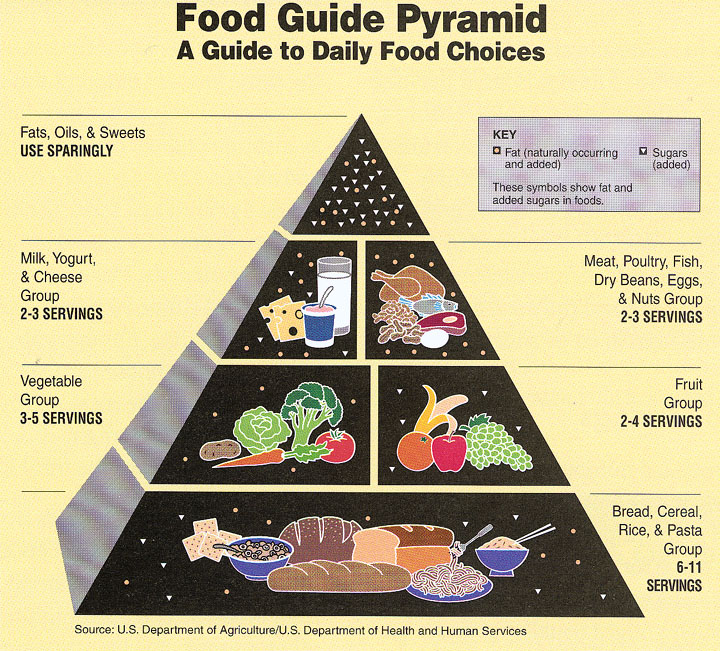
That's the key to everything. So the food pyramid illustrations that governments love to foist on us are so wrong, according to Taubes and others, that there should be a royal commission into the sanity of Canadian health officials.
I was aware of Taubes, of course, because anyone interested in this field knows a bit about him even if they consider him a form of devil and never bother to actually read him.
My son Mark, a thoughtful chemical engineer and MBA living in China, sent me the Why We Get Fat book after a lunch with a respected U of T prof who raved about it.
 I phoned my friend, the prof, to doublecheck that he was still a supporter despite the official battering of Taubes' views. His wife, who also has a major medical doctorate, grumbled mildly when I told her the topic because she said that around their house it might as well be "Saint" Gary.
Yet my friend gave an insight into how some in the medical establishment regard Taubes. He was sitting with other profs after they had evaluated an oral doctoral defence by a graduate student. His colleague exploded indignantly "all that stuff is nonsense" when my friend mentioned Taubes but then betrayed her argument by saying she never read him.
She should. And so should you.
After all, the public health zealots are moving in on us in every possible way from banning big portions (New York giant pop cups) to officials in various countries including Canada proposing new and hefty taxes on junk food.
 I have written about that here.
The National Post just did a story on this under the great headline: Fat taxes like 'shooting rabbits with nuclear weapons." Denmark introduced a "fedtafgiften" or fat tax in 2011 and then repealed it last year. The Canadian Taxpayers' Federation, alarmed that three groups including the Ontario Medical Association are calling for food and beverage taxes to promote healthier living, sponsored Jens Klarskov, head of the Danish Chamber  of Commerce, on a Canadian tour to describe the bizarre, mostly unanticipated, consequences of the tax.
To avoid the tax, the Danes went to Germany to shop, hoarded the taxed foods, hated the tax, claimed a loss of 1,300 jobs, all for an estimated result that 10 years after the tax introduction, Danes might live 5.5 days longer.
No thanks to fat taxes. After all, battling weight is hard enough without governments screwing up in taxes and advice. I have described some of my own battles over the decades. You can read about it here.
Right now I am 235 and hope to be around 230 when I can swim regularly in the Trent. My top weight was 319 but as I have written in blog.johndowning.ca I haven't been that for years. And I can assure you that I would have lost weight a lot quicker over the years if I had read the books by Taubes.
Consider this blunt statement by Taubes which should make you change your diet today. '"Those who lose fat on a diet do so because of what they are not eating --the fattening carbohydrates - not because of what they are eating."
Taubes urges docs and dietitians to get off their ample bottoms and do major studies instead of fiddling while Romans fatten. "If so many people are getting fat and diabetic in large part because we have been getting the wrong advice, we should not be dawdling about detecting that with certainty."
Taubes says the "fault lies entirely with the medical orthodoxy" that excess fat comes because of the consumption of excess calories. He says we don't get fat because we eat too much and move too little.
But you should be reading dozens of paragraphs about this, not just my synopsis . Look at his other books too like Eat Fat And Grow Slim  and the Carbohydrate's Addict's Diet.
Dig out your old diet books too, particularly those by Robert Atkins and the Duke and South Beach variations. Taubes cites a major study comparing the results of the Atkins diet to traditional, Ornish and Zone diets. There is no doubt that Atkins was a major figure for so long because his diet really worked, and the patient's health also improved in other ways.
In a nutshell, which Atkins would have approved of, stay away from carbohydrates.
So you can fill up on meat, fish, chicken, eggs, cheese, fruit and leafy green vegetables but get glorious results and also make yourself even healthier by avoiding sugar and flour, including that found in bread and cereals. Put white roots like potatoes on your hit list too. An example: Eat the hamburger but not the bun and fries.
Thanks to son Mark bringing home some newspapers as well as the Taubes book, I read an interesting article in the South China Morning Post about the problems generated by the huge fears over the obesity epidemic.  Dr. Lucy Aphramor, a British health researcher, thinks that in many ways all the measurements of our food amounts and body sizes given us by schools and governments and supposed experts are actually making our mental health worse.
She says that the measures are often based on this bald falsehood, that science is decisive on the link between health and weight. The Post quoted her as saying the focus on weight as a preventable health issue has created an official environment where fatties are ridiculed and treated as second-class citizens. As a result, everything from their emotional state to the health of their heart and bones is affected.
This is an important side of the obesity debate because so many rise eventually back to the weight that caused them to go on the diet in the first place. I didn't because I changed what I eat. There are many who say that you can't keep your weight off unless you transform your lifestyle and exercise regularly. Fine, I guess, but carbohydrate consumption is most important.
All I am trying to do in this column is to say that eating less and exercising more is a sensible thing to do but it's just stupid to ignore Taubes on carbohydrates if you really want to slim down.
 It's also important not to let the bastards, the lean sanctimonious jerks, grind you down on your weight. There should be more reality and acceptance and less daily sniping.
Aphramor is a supporter of Health at Every Size, a movement that sets out to change attitudes to weight and diets. HAES urges intuitive eating, listening to your body, eating when hungry and pleasurable activity along with body acceptance and self-confidence.
In a paper she wrote with a California prof, she said: "Current guidelines recommend that overweight and obese individuals lose weight through engaging in lifestyle modification involving diet, exercise and other behavioural changes. But the majority of individuals are unable to maintain weight loss over the long term and do not achieve the putative (promised ) benefits...This weight focus is not only ineffective at (achieving) thinner, healthier bodies but may also have unintended consequences...."
As a promoter of the HAES approach, she argues there is no evidence that obesity campaigns are effective. Instead there is an increase in problems and no weight loss that lasts.
As The Economist pointed out in a recent special report, we have gone from a world where there was too little to eat to one where it is plain that obesity is a huge problem. But as studies by Dr. Rudolph Liebel of Columbia University pointed out several decades ago, the very mechanisms that make people obese also prevent them from losing weight easily.
One conclusion by the respected British magazine was "that the unfortunate truth is that no single policy will bring down obesity rates on its own. Societies got fat for a variety of reasons, and individuals, companies and government must comes to grips with all of them to reverse the process. It is easy to argue that if fat people would only stick to their diets and exercise more, the problem would disappear, but environmental, psychological and biological factors make it much harder to lose weight than it seems."
But the fortunate side of obesity, as The Economist pointed out, is "that it is an entirely preventable problem. Its rise has been quick and extreme. Now the world must act to revise that rise, and fast."
We can't do that if doctors and dietitians continue to give the same old failed solutions.


Friday, February 15, 2013

IN DEFENCE OF THE GENTLEMAN C MARK


DON'T FUND JUST THE GENIUSES

For once the Toronto Star got it right when it attacked a Conservative leader. Generally their editorial writers are so blinded by Grit BS that their credibility would never get a passing mark.
The Star argued that Ontario Tory leader Tim Hudak got it wrong when he suggests that university and college students only get government loans when they have high enough marks.
Exactly how high their marks would have to be isn't specified, and heavens knows that in this day of mark inflation, I'm no guide. I survived to my degree only because the old C, a 66, was considered a decent mark if you were enjoying school and doing reasonably well without being one of the mark hounds in the class hoping to be a doctor, lawyer or teacher so they could order people around.
For many in the academic world before marks were goosed, a C was fashionable if you weren't Rhodes material.  It got that universal nickname of the gentleman C because it was said to indicate a person smart enough to pass but not dumb enough to work 24/7 at it.
The Star gave the apt quotation from a great president while falling into the trap that any old copy editor would have spotted. They have Truman observing that "C students run the world."
(They call him Harry S. Truman when any student of grammar and American history knows that there was no period after S because it didn't stand for any name. Truman, the haberdasher, thought the voters would like him better with an initial rather than just being plain Harry. Turned out the voters like plain-spoken Harry just fine.)
But back to Hudak's idea of injecting the student financial aid program with more market discipline. Be very careful about screwing around with student aid if you cut off the late bloomers and all the men and women who go on to be great successes while being a mark flop at university.
I've been there. I have been at both the top and the bottom of the class. It depended on whether I liked the subject and the prof.
There used to be something called the dominion-provincial bursary where in second and third year you could apply for $300. To put that sum in perspective, I got $150 on my first attempt but that was enough to pay for my tuition.
I had a good year and anticipated getting the entire $300 the second time around. Nope, another $150. So I wrote a rather graceless thank you note. I pointed out that I was an orphan, president of the student body and first or second in my class in all the courses. What did I have to do to get the full amount, I asked sarcastically? Did I have to be crippled and blind too?
I think there are too many universities. I think it is a mistake for the colleges to sneak up and try to be universities too. I think too many young men and women go for useless post-secondary education which prepares them for absolutely nothing while the country cries out for more electricians, plumbers, carpenters and other trades.
But please, please, please, as someone who could either scrape by or be the class leader,  never judge only by marks, and give student aid to everyone who is managing to keep afloat.
As an Editor, I hired everyone from columnists, reporters and secretaries to photographers, technicians and copy editors. I never asked and didn't care a damn about marks because the people around me at school who got high marks were often those with whom I would never want to share a desert island.
The Star quoted U.S. president George W. Bush in a 2008 speech to the graduating class at his alma mater, Yale. Bush said: 'To those of you who received high honours, awards and distinctions, I say, well done. And to the C students, I say, you too, can be president of the United States."
What takes the edge off the anecdote is that the great American universities are notorious for their "kind" treatment of the sons and daughters of illustrious and rich graduates and what we used to call captains of industry. There's also little doubt that in an age of routine 85s and 90s, the old-fashioned gentleman C has vanished into history because any prof who dared give such a low mark would probably have the parents suing the university.
It's so obvious that reasonable student aid is investing in the future of the country that I suggest Hudak find easier and more galling targets, such as Grit corruption and ineptitude. We should ask any MPPs who deal with this issue to make public a transcript of their marks. Betcha some were real duds and got into politics because they couldn't make a living in the real world.

Thursday, February 14, 2013

JUST RUN THE BLOODY CITY


ENOUGH OF THIS VISION CRAP

Is there anyone in Toronto, or any other major Canadian city for that matter, who believes that their municipal government is efficient and economical and quick to deal with problems before they become crises?
Is there anyone in Toronto, or any other major Canadian city, who can't identify quickly some road bottleneck near their home or pothole or broken sidewalk or public property infested with garbage which could be cheaply and quickly fixed?
Is there anyone in Toronto, or any other major Canadian city, who talks over the fence or at parties about how nice it is to have a responsive and inexpensive urban administration?
Yet what we get out of Silly Hall, or from the deep thinkers in the media and universities, is laments about the lack of vision and planning for the city's future.
Why can't they just make the bloody city work now? I would settle for that and can the lofty speeches.
Instead of these constant debates about future transit lines and Gardiner demolition and who does what to whom in governance, why don't they concentrate about how to fix this city without spending additional fortunes.
What have we really got from our municipal politicians every year for a couple of decades but annual tax increases and such wonderful "improvements" as a silly ban on weed killer which had no scientific basis but environmentalists said it was the right thing to do.
Of course they would. They would ban eating and drinking if they thought they could get away with it because anything man does on earth pollutes. The only question is the degree.
Ironically, the Gardiner expressway is symbolic of the problem as well as being practically iconic. One of the most used expressways in the world is falling down because of deliberate neglect. The debate about its future ignores the reality  that the city is so wrapped around the road that removing it would not change the geography and thickets of skyscrapers around it unless incredible sums were spent.
 It would be like putting the Humber in a tunnel and then expecting that the buildings on both banks would somehow be rearranged as well as all the local traffic patterns. Do they not realize that there isn't a major city in the world that hasn't had to build around massive ancient infrastructures?
And after half a century, the Gardiner is as dominant in our geography as the Great Wall of China. So let's just keep it up and working and tell the zealots who have never seen a traffic artery that they don't want to clot to go peddle their bikes on the Island or some other place that they stole from public ownership.
Once upon a time, I was guilty on the vision thing myself. I gave a speech about putting Ryerson on the map and was elected student president by my fellow students who felt like Third World refugees compared to U of T students.
After a few months, a fellow journalism student borrowed my typewriter and my paper to write a blistering editorial about my inadequacies as SAC president which I had to publish in the Ryersonian as the editorial page editor.
I hadn't delivered on the PR dream, he wrote. My reply was that I was just trying to keep the student council working when the hostile administration was trying to expel students for Mickey Mouse crimes and generally ignoring anything the students wanted by way of change.
But then I didn't have to get re-elected. Politicians do. So instead of all that dutiful riding work, to find out why the garbage wasn't collected on this street or why the plows missed that street and why the signs at this intersection don't make sense, they hire a secretary or two to whine at city officials and they posture instead on major stuff so that they can boast come voting day that they actually really did something grand.
They try to sell us dreams when all we want is a city that works. We want them to work instead of just dreaming.
Do most Torontonians care about "muscular mayors" and stronger powers for council in general, which is the wet dream of new city gurus like Richard Florida, or do we just want to keep taxes down and services up.
Ironically, Rob Ford, the mayor that Florida and the dreamers love to hate, really looked after the ward as a councillor, returning all the calls and chasing all the notes about complaints, often in person. I can assure you that if Toronto had 45 such politicians on council, the city would be a much different place with officials who actually fixed things and just didn't give excuses.
The problem is we have fatcat politicians, many of whom could not make this money in private life. And they are at the pinnacle of an organization where "fair wage" practises mean all city contracts are too high, because no real competition for the city work is allowed. And if the work is done in-house, the obese civic unions basically reduce to those work crews you see at the side of the street that are composed of a supervisor and a deputy, two guys to hold the coffee and one guy to do the digging.
That's my dream, that we have a lean and reasonable urban government, and that when we dream about the future, we are not building pipe dreams on a rotten foundation.


Wednesday, January 23, 2013

SCREWED BY STRONG MAYOR ZEALOTS


FORD AND MILLER: EXAMPLES OF BAD STRONG MAYORS


"I told you so" must be one of the most galling retorts in an argument.
But I did.
I warned you and warned you (is that enough warnings) that strong mayors don't often make good government. I know that rooted deep in the consciousness of poli sci profs, media gurus, lazy reporters and a few activists is the burning desire to boil each government down to just one person.
This will cut down on their time and costs in lobbying, coverage and criticism because the targets will be just a few persons.
 So what if in Canada there are more than 300 MPPs, hundreds of MPPs, thousands of councillors and gawd knows how many senators and other important patronage post.
If federal, provincial and municipal governent can be reduced to Stephen Harper, the new feminine version of Dalton McGuinty and our very own Rusty Ford, then the watcher doesn't have to figure out the rest of the cast of thousands.
As I have written often, it's wonderful if you get a good leader and terrible if you don't.
I kept bringing that up in one of the key task forces studying overhauling the City Halls of Ontario. I kept repeating the folk wisdom that it's wise never to put all your eggs in one basket. You shouldn't do that with your investing, your future,  and certainly not your politics.
I am addicted to the TV reruns of The West Wing. Read any great political biography like Richard Gwyn's on Sir John A. Work near the top of the power structure of any large company. Wander the back corridors of power. And it as obvious as night follows day. There is no doubt that the leader is the first among equals but he or she holds power not by iron-fisted dictatorship but by keeping enough of the squabbling barons beneath them happy enough to support them so that they can  continue in power.
There are those like councillor Karen Stintz, who took speech lessons which didn't improve her delivery or her thought - or curb her ambition either - which blame City Council's woes on Rob Ford's lack of vision, or programs, or just fill in whatever they're complaining about the mayor these days.
Mike Wilson, with an honourable career behind him including finance minister and our ambassador to the U. S.,  argued with me in the old task force that a mayor should be given the tools to implement their promises during the election campaign.
Wilson is such a calm, decent thoughtful man that I felt when I argued  that I was throwing a rock through a stained glass window by bringing up the fact that corruption and stupidity are hardly unknowns on the mayoral scene in North America and some PR chump building a quiet fortune could do great damage to a civil service and the city even if they could be overruled ultimately by council.
We now have suffered through two "strong" mayors. David Miller used his powers to strut on a world stage while keeping them happy down on the City Hall farm by promoting every socialist solution that has ever suck the money out of taxpayers.
Then came Ford with all the right ideas  (if you are a compassionate conservative) but all the wrong moves in implementation.
It matters not to me whether you liked (or were flummoxed) by Miller , or a Ford Nation zealot willing to put up with clownish nonsense in exchange for real reductions in spending. The reason is that my argument applies to both. Both would have been better mayors and accomplished more if they were not "strong" mayors but the garden variety Canadian mayor which leads cities by honourable compromises and not dictatorship.
The crazier of the Miller Lite schemes,  and the obsession with heavy transit, both would have been sandpapered into better programs. Or they would have died if a consensus did not collect behind them.
There are 44 councillors and one mayor in Toronto. Shouldn't a mayor have to win 23 votes by the logic of the compromises that they broker?  Ensuring that the mayor fill all the major posts, from the chairs running the major committees to the TTC may appear to be a good idea. But that is just slammed on top of their huge PR advantage on every issue that many Torontonians don't have a clue about who does what and thinks the mayor really runs everything. Or should!
A good mayor is like a good symphony conductor, controlling everything about the product.  Success is not individual but a triumph for the orchestra, but only if the orchestra performs as well as the conductor. At Toronto City Hall you have a conductor who isn't doing that well but he certainly isn't rescued by all the malcontents who insist on playing other compositions on top of his score.
And so we all suffer, staggering from court case to crisis to cliff with the mayor and the verbal posturing from too many councillors who are anonymous even to their neighbours.
We have councillors who would be lucky to work on an assembly line who are overpaid to crank out an urban sausage where  the stuffing is petty patronage mixed with guesses and gushes and the skin is guaranteed to give you the runs when it comes to taxes.
This lot wants to rule for four years. We sure suffer in the name of democracy. Perhaps two years less a day would be better, and any resemblance to the usual jail term is intentional. Except the public is the ones who are punished.


Friday, January 18, 2013

WHEN I WAS DEAR ABBY


ADVICE TO THE LOVELORN WAS EASY WORK

Since there seems to be more critics than journalists these days, I write with some trepidation because I'm sure they will find this unethical.
But once upon a time, when the mail was late or went missing, I played Dear Abby.
And no one dared joke about it because I had not yet shrunk from 6' 2" and 300 pounds. I was probably the largest Dear Abby pretender in the known universe.
One of my chores as Assistant Managing Editor at the vanished Tely was to run all the departments except sports while still trying to be a real newsman.
And so it was that I was in the composing room when some ink-stained wretch grumbled he couldn't find a Dear Abby column. So I called upstairs and the secretary who was better at being a national athlete than she was as a secretary said vaguely that we hadn't got any Dear Abbys for a week or so.
There wasn't anyone left in the LifeStyle section, which had been renamed from the Women's department as a slight bow to feminism or something. No one to dash one off. So I did what all young editors do facing a crisis. I improvised myself, and didn't tell a soul at first in case there was some syndicates fine for imitating the writing of one of the most popular features in North American journalism, probably because it was so quick to read
Mary and every woman over the age of 18 have always told me that I know nothing about women, romance, women, love, women, fashion....while you get the drift.
I banged off a Dear Abby where the letter writer seemed slightly deranged but the advice was so convoluted, no harm would be done.
No one said anything the next day. I saw Dear Abby being read in the newsroom by the usual suspects who pretend they never glance at such folderol.
So I played Dear Abby for a week until we got hold of the U.S. syndicate and found some kid newcomer was sending our stuff to the Telegram in England. I was almost disappointed when the new material arrived. I had asked Mary for advice but she thought the idea that I would be writing about love was so nuts, she wanted nothing to do with it.
I always liked Abby, who just died, rather than the Ann Landers advice from her feuding twin sister,.
A couple of weeks later,  when I was trying to survive in the composing room without touching too much type and causing a labour walkout, a comp said there was no bridge column and why did he have to keep track of regular features like that when the muckety-mucks upstairs got paid a lot more to play editor.
He plainly expected me to produce one as quickly as a Dear Abby. I bowed out, saying Mary thought that my bridge playing was even worse than any views I had on love. Besides, I had learned from phone calls that one tiny mistake in the bridge column or a crossword would bring down the wrath of readers on my head. Grappling with the eternal mysteries of love was a lot safer.