Wednesday, April 29, 2009

EVERYTHING OLD IS NEW AGAIN

The More Things Change The More They Stay The Same

I'm still singing that song about "everything old is new again." What's sticking in my throat is all this nonsense about the apparent invention of frugal living. Please! When you throw in this wonderful new concept (I'm being sarcastic) of recycling and conservation, I become nauseous.
After all, there are many of us who have never overdosed on credit cards, who know that being careful with resources wasn't just invented by mouthy activists and media mouths who never bothered to find out what happened before they were hatched.
I know that for readers past the Biblical promise of three score years and ten, and for many in their sixties, this is just a return to basics, the way many of us lived when we were kids and our parents had only modest means. Even those in their thirties and forties may understand what I'm talking about because the explosion in wasteful living is only a couple of decades old.
In the 1940s, I was a kid living in a little house in Chesley, which is southwest of Owen Sound. And we lived out of necessity the way the greenies do today out of flamboyant conviction.
There was an outhouse in the woodshed, papered with big posters of the generators at Niagara Falls. A "honey" wagon was a common sight emptying the outhouses.
Oh yes, there was a compost heap in the back yard, and many scraps we also fed to the Leghorns which we ate after they got too old for laying. We even fed the chickens any preserves that had gone bad, causing them to stagger around drunkenly. My Baptist grandfather didn't appear to notice even though he once worked in a distillery.
We grew most of our vegetables and fruit on the empty second lot beside the house, which was common in towns around 1950. There was still lots of space around the houses and garages often were converted stables.
The house was heated by running the hot water pipes through the fire box of the wood stove, which was also the only heat for the house. The stove was one of those smart old ones with a warming shelf up top and a reservoir to heat water on one side. Plenty of hot water on those days when the bread was baked, since many people didn't buy store bread.
There was a pump in the kitchen for the cistern which was under the kitchen floor, fed from the eaves troughs.Now this old-fashioned house featured many of the green gimmicks which are now touted half-a-century later as the latest thing. And I'm not just talking about growing your own vegetables.
I have a Envirolet composting toilet at my cottage, and indeed there's still an outhouse tucked behind evergreens for winter use when I've drained the water pump.
I would just love to have a big old wood stove at the cottage, fed from all the limbs that fall in the winter, but they now cost a fortune. Saving rain in barrels is now so fashionable they have fancy varieties which conceal the function behind bric-a-brac.
And so it goes. Yet we are told breathlessly about how the latest fad is to live frugally and greenly.
Let me give you a few more examples of how green most of us really were 50 or 60 years ago, starting with the fact there was no need for blue boxes and grey boxes etc. because every bottle was saved for jams, preserves and nails. And boys like me trundled our wagons around Chesley collecting newspapers which we then sold to the furniture factories for packing.
No one threw away newspapers because paper was needed to start stoves, furnaces, bonfires and trash fires. (Of course that's a socialist no no today since the lefties/gliberals won't even allow clean incinerators producing watts from waste.)
When you bought groceries, every store in Chesley subscribed to the Vandervort delivery truck and your groceries were delivered a few hours later. No one walked the streets carrying groceries. The local dairy also had refrigerated lockers where you could store your meats etc. so you didn't have to have a home freezer. (And it sold buttermilk for a nickel a pail.)
The big furniture factory also owned the sawmill so a team pulling a wagon filled with sawdust plodded by my house every hour ferrying the sawdust to the factory furnace.
Now the good old days often weren't. Half-a-century ago, a major illness could bankrupt a family because Medicare and welfare hadn't yet transformed the lives of Canadians. But all of us lived carefully. Any string on parcels was rolled into a big ball for reuse. If the Post Office missed cancelling a stamp, we soaked them off and glued them to our new mail, which still drives the posties nuts as they rant about it being illegal.
So we no longer have the luxury of as much space around our homes and cottages. And new windows save us more heat than the big old wooden ones. Same with modern insulation. But when I read Time talking about a young chap whose idea of hardship is that he can no longer buy $200 ties, when I read newspaper stories about teenagers now being careful about their cell phone costs, when I see the expanses of useless space in the modern show homes, I wonder what kind of fiscal insanity infected North America before the recession/depression forced more sanity on people who never ever have had to save, who knew that life was only going to get fatter tomorrow, who have just learned they should have been living within their means.
Giving mortgages to sucker who had no down payment, allowing people to max out six credit cards, advertising even after the depression/recession hit that you could get a loan without one credit check, all these are just a few examples of the good times madness that struck every street which are now lined with leased cars that people can't afford.
Chesley was hardly a dream town, but most of the people there 50 years ago would have observed what passes for ordinary living today with amazement. What about saving for a rainy day? What about never buying on time, with exceptions for the house? What about saving 10% of everything you earn, which everyone from the wealthy barber to Dickens said was the key to happiness and prosperity? What about buying a used car (avoiding that crap about pre-owned) until you could really afford a new one? What about using the old stereos and TVs even when fancy new varieties tempt you?
History is filled with crashes of markets and dreams. Only fools would think that it would never happen again. Many thinkers have reminded us that those who ignore history are doomed to repeat it.
And yet many around us did choose to ignore history. They kidded us about not living as well as them because, after all, we can't take our money to heaven/hell. They forgot that everything old should become new again, especially when it comes to living without the worry about how to pay for tomorrow.

Tuesday, April 28, 2009

GREEN HYPOCRITES WASTE TAXES

Everything Old Is New Again

The politicians who don green capes to conceal their nakedness when it comes to thrift with taxes and good new ideas are the curse of our lives.
They hold special Earth Days and hire PR flacks to put out costly brochures about how great they are when it comes to the environment. Mother Earth has survived many things, and she will survive anything that these envirocrats dream up, but it does become tedious and costly.
The green hypocrites are led in Toronto by Mayor David Miller who presides over a city that throws away money to make it look good while failing completely on such basics as actually providing the basics of city services.
As just one example, the potholes and shoulder ruins of Toronto streets are the worst I have seen in my entire life. When you return after seven weeks driving on smooth roads, the disrepair of our streets is a poke in the eye.
It just intensified the rage against the city's new car tax which will collect almost $50 million this year.
While Miller struts around the city and indeed the world as chair of an international clutch of municipal leaders said to be green too, Toronto's infrastructure rusts out or sinks.
The international clutch even have a new home in London, and Toronto taxpayers are paying $140,000 towards that headquarters so Miller can visit his English roots.
On the last civic Earth Day and its barrage of feel-good bureaucratese, Miller unveiled $21 million worth of measures to make City Hall a showplace for the environment and not just for conspicuous waste. Of course, city councillors follow in the footsteps of politicians everywhere and keep announcing the same programs over and over until they become shopworn before they are even opened.
When you consider all the pronouncements with healthy skepticism, some of them unravel into mere maintenance. In other words, if you're going to spend $6.8 million to fix the place up, mainly on new windows, you call them "energy efficiency improvements" and hope people don't wonder why you're spending so bloody much on windows.
But then you say you're going to spend $2.3 million on a green roof at City Hall. Wow, just imagine, a green roof, just like they've been installing at Exhibition Place. I guess settlers all over the world, from the steppes to the prairies, didn't realize a hundred years ago just how modern they were with the sod roofs on their hovels, sheds and their barns. If they had known, they wouldn't have done their damndest to get away from green roofs because they aren't as easy as plain old-fashioned roofs to maintain. And with the price of sod these days, ordinary shingles look like a bargain.
Exhibition Place has been the showplace, or so they say, for the city's research and development of expensive green technology. The Toronto Sun headlined one of the schemes "wasting taxes while looking good," a headline that could be used almost every time the socialist/gliberal majority of council gets a so-called bright idea.
I've already written a blog on July 26, 2008, of how city politicians and senior bureaucrats are spending $935,000 to collect rainwater on the roof of a renovated Automotive Building even though one of the largest lakes in the world is just across the road. Hardly something to boast about since there won't be enough rain in the summer to flush the toilets and this radical "new" idea of collecting rain in cisterns is really thousands of years old.
Maybe Miller and Deputy Mayor Joe Pantalone need to visit more ruins, and I'm not just talking about city buildings that they have let fall into disrepair.
(The wonder is that Pantalone is still chair of the Exhibition Place Board of Governors. I know something about that board since I was once the vice-chair. Pantalone and the city have just lost the Sportsmen's Show to the provincially-run Convention Centre, meaning Queen's Park and not the city will now get at least $800,000 in annual profits. All because city council passed a bylaw against guns being displayed and sold on city property, which meant the show couldn't continue at the Ex. Pantalone tried to amend the bylaw so it covered only handguns, which is, after all, the concern, but council balked. And so we have council screwing the Ex again.)
But back to the Millerites costing us a fortune so they can look good. They're going to spend half-a-million on clean electricity from an outfit called Bullfrog Power. (I guess BS Power was taken as a name.) A good idea except they will be paying almost double the normal rates. Surely that's too high a price to pay to help the environment. But I guess the {blue) sky's the limit when it comes to spending our taxes on their environmental salvation.
The city still talks about the $1.8 million wind turbine at the Ex. It was supposed to be a brave demonstration project almost a decade ago but I voted against because turbines were already common throughout the world so why put an expensive version in a downtown park. Besides, turbines are just windmills and they've been around since the caveman. I feel vindictated every time I drive by and see that it isn't working....again.
The city has been talking about utilizing the deep lake water cooling system for almost a decade. A good idea. Now they're going to spend $2.9 million cooling old City Hall. I spent two years working there and it is already a remarkably cool building in the summer. Those thick walls! Why spend this now when the city has been leaving beyond our means for years? And they're also going to spend another $2.9 million cooling Metro Hall. That building was the headquarters for the vanished regional government and the city would have sold it years ago if it could have got a good price. Hardly a smart investment.
Oh yes, they're saving trees and paying a good buck on salaries for environmental activists. The new special environmental office has a staff of 25 to promote old measures, some of them hundreds of years old. Among their main hot but green ideas will be to encourage more of us to put grass on our roofs. Of course, you won't be able to spray your roofs for weeds and after a few dandelions and other stout-rooted weeds grow through into the attics, you will join the many of us who would just like the bloody council majority to just run the city, damn it, and stop it from falling apart.

Wednesday, April 1, 2009

IRRITATING CONVENIENCE FOR BOORS

One Of Society's Biggest Wrong Numbers

The crowd had been swept from the giant beach by the winds. I plodded along towards the only other person. When I passed, he was shouting instructions about his business to some poor sap.
Nope, you can't get away from the cell phone. No matter how remote and solitary you may be, and no matter how much you yearn for peace from the world, there is always some yahoo bellowing into a phone.
The cell phoniacs are often so rude, they really don't seem to understand when you accuse them of rudeness.Once upon a time, a cell phone would have been the answer to my prayers. As a reporter and later an editor, I was always stuck in some nook of the world frantically trying to contact the office.So you would think that I would regard the cell phone as a wonderful evolution in communications technology.
I do.
But the silly plague that has kids reporting every step they take to school, that allows the chap at the Florida pool to conduct six hours of business while you are trying to toast and tan, that has the jerk in the car just ahead of you wandering in and out of his lane while driving spasmodically, and all of the other nonsense that people pull with their cell phones, has me wishing they were hung and quartered while some supreme being yelled in their ear.
Mary and I sat in a restaurant near I-75 on a trip to Florida while the woman in the next booth, who has a business pumping out or repairing septic tanks, conducted a 30-minute interview on her cell with a customer who wondered why his tank had backed up into his house. She described in graphic detail exactly what would be the problem. When the waitress asked us what flavour of ice cream we wanted, I said anything, as long as it isn't chocolate.
It is amazing, however, just how cell phones have revolutionized journalism.
At Ryerson journalism school back in cave-man days, Ted Schrader taught us that the first thing you did when you got to a story is figure out how to get the story back to the office. Rye grads still talk about his iconic lecture on getting the story back from the Red Lake fire. He had marvelous stories, like the one about bribing a bulldozer operator to park across a mountain road so the opposition couldn't get to a phone and file his story.
The "scoops" often went to the first reporter who could figure out how to get the news back to the presses.
Of course there was also a problem with telexes, telegraphs and LD phones when you wandered the world. It blighted some of my stays in the world's beauty spots. Like the hotel converted from a monastery. How wonderful to have spent the night in a thousand-year-old monk's cell. If only. I ended up being in the room for only 20 minutes because I couldn't get a telex line to North America.
Now you can direct dial from Beijing, or send e-mails from Cape Town, or talk from the peak of Mount Everest, without having to crawl around the floor disconnecting telephones to make your old computer work, complete with its now-ancient acoustic couplers (don't ask).
How great it is in the remotest spots on earth to aim your computer's dish at some satellite and, presto, the editor has the story. Except now the office can get hold of you any time they want, meaning there is no down time. In the bad old days, at least you had peace in between the calls once a day to the boss.
There is no need to talk at length about the plague of cell phones that causes children of all ages feeling they have to talk to their friends every 15 minutes.
And there is no need to remind at length how some people have never mastered the technology and feel they have to talk in a loud voice, or even bellow.
The curse of the driver on the phone also is apparent, damn it, on every road. Even the phones that you don't have to hold can distract a driver right into an accident. Unfortunately, enforcement is spotty. The Ontario Safety League, a venerable non-profit lobby for safety (I have long been a director) was pressuring the Ontario government to crack down on cell phone use by drivers in moving vehicles, only to have the government lurch into action without bothering to spend the necessary time on drafting how the new law would actually work.
Perhaps the abuses will be reduced when the public stop using cell phones as the latest toy instead of a useful tool. Perhaps more people will join the club of which I'm a charter member. We carry cell phones but only use them to make brief calls. Unless we are expecting a call at a certain pre-arranged time, our phones are turned off. Life is simpler that way.
We get all the advantages without being bothered all the time. Now if I can only turn off the sun bather beside me at the pool, or the guy yelling into his phone on an empty beach. The golf clubs that ban cell phones have the right idea. Now if it would only spread to theatres.
On my latest trip, I lost my cell phone in the luggage (Mary takes a lot of stuff) and didn't find it for two weeks. I was kind of hoping it had been stolen.

Sunday, March 22, 2009

A SHUTTLE OF PAST GLORIES

The Good Old Days In Space

It wasn't a moment I had anticipated, one that I planned for. I turned in my chair and there was this glorious fireball in the sky. And as I watched and people around me gasped, the fireball kept climbing and then there was this magnificent tail tracing white against the blue sky.
Another shuttle launch.
It's something we take for granted. We barely notice the delays because of weather, the safe returns.
We do notice the questions about cost and value. Except in the days of 50 billion dollar frauds, the cost of space are dwarfed.
Once upon a time, I would have plotted for days to see a shuttle launch in Florida. I would have consulted maps and newspapers and the Internet, maybe even phoned NASA.
It was part of my training as an assignment editor when before political conventions, Stanley Cups and Grey Cups, I plotted camera positions and reporter assignments and knew just about everything it was possible to know about an event the day before.
Like many other Canadians of a certain age, I cheered when our American cousins finally matched and then surpassed the Soviet Sputniks.
On a bedroom wall, ignored, is the large iconic photograph of the astronaut staring at the camera, the reflections in the mask showing his surroundings. The photograph was printed from the actual negative of the actual film that had been to the moon. NASA said the picture was only available to certain senior media executives. I was impressed but I don't think my sons were. They had already adjusted to a real man in the moon.
But years pass and we even get used to portraits shot on Mars.
So when two friends and I escaped from the noise of a St. Patrick's Day dinner in the clubhouse of the Boca Shores condo clubhouse at St. Pete's Beach and some people came out on the balcony behind us and started talking about the shuttle, I almost didn't turn around.
Then I heard the explosion of excitement, and there it was, climbing, climbing, climbing while all of Florida gazed into the sky and felt a little closer to the heavens.
It started to curve left, or so it seemed, and it traced sort of a flattened question mark. How symbolic I thought, since questions about the space program persist and it seems, if you leave national ego out of it, that robots can do the job of space exploration much easier than worrying about men in capsules.
The talk used to be about costs. Funny how trillion-dollar deficits and the tender treatment of even the fatcat crooks of Wall Street have made that almost irrelevant.
Since it has been revealed that the financial world has been criminally inept for years, and the financial media were toothless watchdogs, and the bureaucrats who were supposed to be watching were either sleeping or on the take, spending billions on shooting metal and humans into space seems a much better use of taxes than rewarding bankers for being stupid when they weren't being robbers.
Funny how a few seconds of gazing into the sky can remind us of younger days when space was still a Jules Verne science fiction tale and the idea of actually going outside the envelope of earth was still the impossible dream.
When the shuttle landed almost two weeks later, all of Florida, it seemed, was on high alert. There was a delay because of wind and clouds but the state was filled with people searching the skies. They must have known they wouldn't be seeing anything. And they didn't. But there was a big boom when the shuttle broke the sound barrier, and everyone asked that evening, even to strangers in the supermarket, did you hear that noise when the shuttle came back. And then they grinned, as if they had been at the controls.
In this days of broken everything, the shuttle is a victory rocket over a troubled sea. A reassuring sight. Just like the jetliner landing safely in the Hudson. At least we still get something right.

Friday, March 13, 2009

IN GPS WE TRUST

Don't Leave Home Without A Map

You read it here first. Driving tests will soon have you demonstrating that you know how to use a GPS as well as park.
Countless people are wondering how they ever managed to drive to another city without help from the four satellites in the sky. How quickly they forget that learning period where they really wanted to throw the damn thing out the window when it chirped at you that it was recalculating the route because you were too stupid to follow the first directions.
It doesn't exactly say that, but the woman's voice can sound like a nagging wife.
I was given a Magellan Maestro 4210 by my oldest son, John Henry, a scarred veterans of the Downing fights in many of the countries of the world when I tried to drive and Mary tried to read a map.
I still think it wasn't an accident when in the south of France, in the middle of a debate about why she wasn't allowed to drive in Europe, she told me to take a right turn at the next intersection - right into the maw of a one-way street delivering five lanes of angry motorists right to my bumper.On another trip, we went around the Arc de Triomphe twice - in Friday evening rush hour traffic - with Mary announcing she couldn't see the street our hotel was on but she didn't really care because she was getting out. The fact she then wouldn't know where I was in Paris didn't concern her much.I have plenty of stories like that but I will refrain. After all, some female reporters once posted a petition on the bulletin board announcing that the Editor was a jerk because I had written too many columns, or so they felt, on Mary's problems reading maps.
So the GPS seemed like a God-send. Trouble is there was no book of instructions. So after I downloaded 60 pages of instructions from the Internet - actually my son Brett did that for me after I failed several times to make Acrobat do the proper somersaults and produce anything for me - and I then spent several nights trying to figure them out, I figured I was ready for just about anything.Now once upon a time I drove from Toronto to Fort Lauderdale without a map. Someone had left the bundle behind from the CAA. And once I drove from Zagreb to the north of Slovenia without a map and then went on to Budapest still without a map. In those days in Hungary, there were few service stations and no maps to be had at the few there were.
So I can manoeuvre without a map. And I thought with my new GPS I wouldn't need one. Turns out you do. I'm sure after a few expeditions, I will have mastered feeding info into the GPS, but right now I need a map just to make sure the GPS has me in the same state.
We were driving from Howey-in-the-Hills, which is a vacation hamlet northwest of Orlanda back to Tampa, when I discovered that there was no Florida map in the car and the GPS seemed to have me going southeast instead of southwest. So I watched the Toyota compass and kept driving west while ignoring the GPS chirping away telling me to make legal U-turns or recalculating the route at every intersection. I figured at worse I would end up in the Gulf, at best I would cross I-75 flowing south to Tampa. I hit the interstate before the Gulf and all was well.Later, looking at a map, I found I had driven about as far as you can go in Florida without hitting a major settlement. I was in a triangle between I-75 and Florida's Turnpike. Now I wouldn't have worried if I could have placed all these towns I was going through, like Linden and Mascotte, somewhere on some map. But we had left all ours back at the rental condo. After all, we thought smugly, we have GPS.
At one point we drifted through the Withlacoochee State Forest, which seemed like I had driven off the end of the world. If I had known that the forest was supposed to be in my vicinity, I would have relaxed and enjoyed the drive.I suspect I will become a big fan of my GPS, But right now, I drive along with a map at my side and the GPS chirping at me from the dashboard. And judging from the conversation around the pool, most of the vacationing Canadians seem to be having the same problem. It's not as simple as putting in your home address and driving for two days without a worry. My main problem is the screen is hard to read, except at night, because of glare.
I find my Magellan functions wonderfully 90% of the time, but it's the other 10% that worries me. We go from being told to keep left at the next confluence of roads to silence for half an hour or so. Now technocrats will say that my device will only work well if I know exactly how to use it. You know, garbage in, garbage out. But I'm still puzzling my way through the instructions. Maybe there's a course I can take, a new form of driver's ed.
On my trip home from Florida to Toronto, the GPS gave me heartburn twice and was wonderful the rest of the time. I decided to take a shortcut up 301 to the north-east instead of taking a longer route running through Gainesville. My GPS simply didn't understand and kept urging strange turns on me. Then while driving along the south shore of Lake Erie, expecting to cross at Fort Erie, the GPS gave us mysterious directions which finally had us crossing at Lewiston.
The reward was a shorter trip home, up I-95 through the more picturesque mountains, rather than the winter route south from Detroit on I-75. About 120 kms and a good hour shorter. And done with a lot less tension than the last time before the GPS.
Now I feel like tackling the roads again in the south of England. The last time, we almost divorced.

Tuesday, March 3, 2009

PUMPING GAS AND LIES

Ruining The Open Road

As Mary and I contemplated our annual trip to the Florida sun, leaving behind the crap, and I'm not just talking about the slush on Toronto streets and at City Hall, we groaned as the Canadian dollar sank but cheered as the price of oil fell even more.
Surely that would ease the price of gasoline which becomes quite important when you've travelled 5,000 km by the time you return.
In Ontario, the price was still above 80 cents a litre, even though the price of a barrel of oil had collapsed below $35 a barrel from its high near $150. And I told Mary about how the giant oil companies had complained to the Sun whenever I wrote an editorial complaining that the price of gas seldom sank when the price of crude oil went down. There were always these explanations about how they had actually bought the oil months ago when the price was high and we would have to wait until cheaper product got into the distribution network.
Except those bountiful days never really came. And then there was the notorious gouging at the start of long weekends about which even the oil bureaucracies seemed embarrassed.
Even though the CAA gives you a special map, and I have a Magellan GPS, we took the wrong turn in Detroit just a few seconds after we left the Ambassador bridge. It's always an ordeal finding the big Interstate south, and construction there this year doesn't help.
Of course the signage has always stunk. I remember the year we ended up in the wasteland of downtown Detroit.
Then there was the time the bridge authorities told some pre-cleared truckers that they could use the car-only lane, but there was no indication to motorists of that, meaning I wasn't expecting an 18-wheeler to compete with me and finally come over and crush my fender. Since we were between Canada and the United States, no police force wanted to show up for a minor accident, meaning the trucker escaped punishment for his dumb and dangerous driving.
Oh yes, bridge officials told me there was an accident once a week at that spot of the bridge, but no improvements have been made there for three years. And the confusing labrythn on the American side, and the rickety toll booths, make for a seedy entrance to a country which keeps boasting that it's the best in the world.
Despite its shoddy entrance at Detroit.Of course, two years ago, coming back from Florida and crossing at Buffalo, I found the construction maze and signage so bad there that I kept ranting at the Canadian customs official that it was all so Mickey Mouse that he kept apologizing and sent me on my way after forgetting to ask questions.
My trip south this year did feature, as hoped for, lower gas prices, with me paying from $1.75 to $1.93 for a gallon. Then it jumped higher. Translating this into a comparison with Canadian prices involves so much math, it's not worth the effort. Comparing the Canadian cost per litre with what the Americans are paying for their gallon is a little like comparing sour apples and kumquats since the exchange rate is involved too. But there's no disputing the obvious conclusion: Canadians pay a lot more - and that is far too much - for their gas, and the provincial and federal governments aren't going to do a damn thing about it because they benefit. The higher the price the oil companies charge, the higher the tax revenue that the governments get.
So it's a case not of authorities watching out for their citizens but of robbers watching thieves.
There is a new frustrating wrinkle for Canadians driving down the I-95 "Main Street" to Florida. And I'm not just talking about the endless miles of construction.
Stick your Visa card into the American gas pumps and you find they just won't work. Oh they may appear to work, but then they ask for a Zip Code for verification and then the pump freezes. Or the pump just blinks at you and says "see attendant inside." It got so complicated at a couple of stations that I just left.
So I turned to what was a reliable fall back, the little black cylinder that Esso uses for its Speedpass system. It was rejected. Phoned Esso/Exxon and they said my Visa card had been changed without me notifying them. So they would correct that. Tried to use the black thingamajig several days later, and it was rejected again. The attendant accepted my cash with the comment that he always uses cash because everything else had become so dang complicated.
Which is what I've been doing for weeks. With any luck, my Canadian cash will soon be worth a lot more, because surely the American dollar doesn't deserve to be that much higher than the beaver buck. And if that luck holds, the cost of gasoline will fall to a price that truly reflects the low cost of oil.
But I'm not holding my breath, not with oil companies showing that they're still the robber barons that the world thought they were a century ago, not with governments showing that they're as incompetent as banks when it comes to business.
All I can do is sit on the sand and drink. At least it's not snow.

Friday, February 6, 2009

MAJOR MUSLIM CLERIC DEFENDS ISRAEL

A Muslim Voice For Peace

I have written more than 5,000 columns but this one from May 5, 2002 in the Toronto Sun continues to be a favourite on the Internet because it came from the other side of the great war between Muslims, Jews and Christians. The names of the leaders have changed, and there would be changes in the figures - although refugee figures are often frozen cruelly - but the anguish and the blindness and the hypocrisy continues.

-----------------------------------------------------------------------------------------------

Downstairs in the wine cellar of a trendy Yorkville restaurant is an unlikely setting for an Islamic scholar as he rips at Saudi Arabia for its destabilizing evil and condemns those who pretend the Koran justifies the slaughter by suicide bombers.

To further confound those Muslims who will never rest until they drive all Israelis into the sea, Sheikh Abdul Hadi Palazzi points to passages from the Koran showing the land of Israel was given to the Jews.
For example, Palazzi, chief imam (cleric) of Italy's Muslim community, quotes the Koran (17:104, The Night Journey): "And thereafter We said to the Children of Israel: 'Dwell securely in the Promised Land. And when the last warning will come to pass, we will gather you together in a mingled crowd.'"

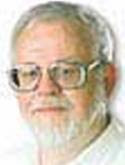
For this controversial cleric, who says his views are more traditional than the present "politicized" consensus of Mideast Islamism, world terrorism and the agonies in Israel can be blamed on the Wahhabis, once just a tribe of Bedouin nomads but now a primitive sect which rules Saudi Arabia through wealth and control of Islam's holiest sites.

He calls Saudi Arabia the "roguiest nation in the world." It isn't a word, but the knot of journalists at the table know what he means, that when you talk about rogue nations, three others of which belong to George W. Bush's "axis of evil," Saudi Arabia must be the leader as it has a foreign policy of using petro-wealth to spread terrorism via fundamentalism.

Those views are the reason Palazzi was busy last week from Montreal to Winnipeg, brought here from his professorial post in Rome by the Canadian Institute for Jewish Research to speak to synagogues, to religious leaders and at the University of Toronto.

When we in the media kept pointing out how different his views were from those coming out of the Arab world, Palazzi reminded us there are Islamic voices speaking out for Israel in the non-Arab Muslim world, from Turkey to the republics of the former Soviet Union. He doesn't brandish his doctorate, by appointment of the grand mufti of Saudi Arabia, or his studies at Italian and Egyptian universities, but points out many Koran interpreters are unordained and little educated; that one, for example, a charismatic Hamas leader, admits his title of "sheikh" is honourary.

Palazzi is a roly-poly 40-year-old whose commendable ecumenical beliefs are rooted in family. His father converted to Islam after marrying his Muslim mother, and he's married to a Catholic. There's nothing roly-poly about his rhetoric or logic, though. So much so, a colleague wonders whether he fears death threats from an Islamic world that finds it easy to kill infidels.

He has been "criticized, attacked, insulted, nothing more," he replies. Besides, he imagines the fundamentalist Muslims of Italy - who control more than 90% of the mosques despite their few numbers, thanks to the fact, he says, that they get all the money they need from the Saudis - talk to each other about leaving him alone because, "We can buy space in the media, we can buy politicians, so what do we care if someone is criticizing?"

He demolishes any religious excuse for suicide bombers.

"They (Muslim clerics) play with words to justify it. They are lying in order to please their governments. It is anti-Islamic because suicide is, by itself, anti-Islamic in principle."

Indeed, there are many moral people and faiths who would support his argument, which goes this way: "You are permitted to kill for three reasons in the name of Islam. When you are a soldier, part of an army, you can kill the soldiers of the enemy, not the civilian population. You can kill in self-defence, if all of a sudden someone is trying to kill you, you have a right to defend yourself by killing him. You can execute someone by order of a court for a capital commission. Apart from those three cases, there are no others in which someone is legitimized to kill in the name of Islam, or in which Islam permits killing."

But then a colleague asked about martyrdom, when a Palestinian feels his land is occupied and he has no hope and his children have no food or future. Palazzi said there is no moral difference between this man throwing himself under an armoured vehicle and blowing it up, or running into a pizzeria and blowing up 20 people eating dinner.

It would be wrong, the cleric said, even in the case of oppression where a regime denies religious freedom. Resistance can be organized against the military if religious freedom is denied, but where religion is respected (as in Israel) but there is other oppression, then Islamic law says you "have passions and bear that injustice or you have got to exile and settle in a land that has no oppression."

Palazzi is savagely cynical about the Saudi-American relationships. He says attacking Afghanistan after 9/11 made as much sense for the U.S. as attacking some other country than Japan after Pearl Harbor. The Americans "attacked the soldiers of terror but not the generals of terror," he said. "If they invaded any country, it should have been Saudi Arabia where they must feel invincible."

And going after Iraq is just the U.S. doing what the Saudis desire. Palazzi says Yasser Arafat and his Palestinian Liberation Organization don't want a state because PLO leaders make more money now than they would running one. If it happens, he says, the Saudis would just say they had won the first stage of a war and Hamas should keep going.

His arguments spill out in a richer mix than the meal.

Then I climb to the street from the wine cellar and walk by the patio tables under the budding trees, where weather is the only concern, not the fear of those who would kill you because they have been deluded into thinking it is a holy act.

-------------------------------------------------------------------------------------------------


The second part of the column appeared May 12, 2002 under the headline:FINDING A HOME FOR THE PALESTINIANS. It dealt with the sheikh's argument that Israel isn't the only mideast country that should be considered as a home for the Palestinians. Surely we must pay attention to this argument as Gaza continues to be a running sore for the Israeli state.


-------------------------------------------------------------------------------------------------

No wonder so many world leaders ignore the history of the bloodstained rocks of Israel and demand the Palestinians be given their own state. They don't want more coming to their country, as they proved again last week when it became so difficult to find a place to deport the 13 Palestinians from the birthplace of Jesus.

They were said to be militants, proven troublemakers. But there's nothing new about not wanting Palestinians in your backyard. For 50 years, thanks to their leaders, they have proven a troublesome, costly crowd with their home industry of terrorism.

Just ask Israel's neighbours, who are so insistent it give up vital defensive space because they don't want Yasser Arafat and his Palestinian Authority in their cities and towns.

There's Lebanon, with 376,000 Palestinian refugees, Syria, with 383,000 such refugees, and Jordan, with 1.57 million refugees. In fact, in Jordan, the Palestinian state already exists that is the hot wish of the UN and now, George W. Bush. The population of Jordan is over 55% Palestinian, making things unstable for the supposedly purer Bedouin tribes.

The only reason it wasn't called the kingdom of Palestine when it emerged from the wreckage of the Ottoman Empire after World War I, as some suggested, was to make it plain it was exempted from a Jewish home state.

It was the Hashemite Kingdom of Transjordan then. And Transjordan became just Jordan in 1949 after its Arab Legion seized the Jordan River's West Bank. The UN designated these biblical lands of Judea and Samaria as Arab lands, not giving them to Jordan or Israel (and Israel should have got them, not only because of their history but because Israel got less than 50% of the land it had been promised in the original British declaration). When Jordan formally annexed the West Bank, it was resented by Arab states as well as Israel.

I remind you of this history because when the UN insists Israel withdraw from "illegally occupied Palestinian territory," diplomats are making several mistakes as they kowtow to Arab oil. It is not an occupation and it is not illegal for Israelis to be there. It is disputed territory that Israel conquered in the Six Day War with Jordan, land the world had never recognized as being Jordanian after Jordan seized it against the UN's wishes.

Got that? I don't have enough space for all the language of the Geneva Convention showing that land taken in a defensive war may be kept until a treaty is worked out. Yet I quote the past for another reason, to justify the answer two weeks ago when Sheikh Abdul Hadi Palazzi, the Muslim scholar and Italy's grand imam, was being interviewed here.

We asked about this demand for a Palestinian state. The sheikh argued there are already two Palestinian states, Israel and Jordan, and what the world is calling for is a new one on the Jordan's West Bank, one he's not confident the Palestinians really want because their leaders like Yasser Arafat are getting so rich from terrorism.

Palazzi doesn't think the Mideast agony would end with a new state. Surely, only the foolish clutching at straws think it would. Such a state, with or without Arafat, who once again is giving us doubletalk on stopping his suicide bombers, would have terrorism as its largest export, an offensively gross national product. And not just against Israel. What about the old Jordanian targets, especially the royal ones?

I doubt it is ever far from the mind of Jordan's King Abdullah, who met with George W. Bush after another suicide bomber had Ariel Sharon cut short his own talks with the president. After all, his great grandfather, the first King Abdullah, was assassinated by a Palestinian in 1951, a terrorist killed the prime minister in 1960, there was a civil war with the Palestinians in 1970, then in 1971 another PM was assassinated by Black September, a Palestinian guerrilla group, and his father was wounded by a Palestinian assassin in 1971. And there was unrest in between those lowlights.

King Abdullah and his country enjoy good relations with the West since such real peace emerged with Israel in the mid-1990s that Jordanian airliners could fly over the Holy Land and no longer have to go around. I was in Israel the day the king's father was at the controls of the first such flight.

I loved Amman and the great archeological treasures of Petra and Jerash on a visit in 1996, after a world media organization tried to meet in both Jerusalem and Amman but the Jordanian part failed. Old habits die hard, especially where the press isn't free. But I enjoyed the country and its great expanses. Plenty of room here, I thought, if a new Palestinian state was established on both sides of the Jordan River.

After all, Jordan has nearly five times the land Israel has, and its history intertwines with the Palestinians. The only reason the UN isn't hammering it like Israel to donate land to the Palestinians is that they're not the Jews or Christians that evil Saudi billionaires want to exterminate.